Showing posts with label revolution. Show all posts

Tuesday, October 25, 2011

Just How Specious is Latin America's Revolutionary Rhetoric?


Although Cuba's Fidel Castro, as one of the fathers of revolution, continues to verbally assault the U.S. and essential democratic principles, Cuba is playing it safe and cautious not to stagger too far off the beaten path of a much better informed world audience.

An exception to this apparent rule is Castro's admiration for his protégé, President Hugo Chavez of Venezuela. Castro does not hesitate to wave the much tattered Cuban revolutionary flag when speaking of his admired pupil.

An op-ed column last week by Fidel Castro graphically demonstrated his remaining true moniker of world dictator. He remarked, "Given its exceptional educational, cultural, social development and its immense energy and natural resources, Venezuela is called upon to become a revolutionary model for the world." And with what must have been a monumental attempt to be sincere and appear rational, he added, "I had long conversations with (Chavez) yesterday and today. I explained to him the intensity with which I am devoting my remaining energies to dreams of a better and more just world." (Digital Granma Internacional, Havana, Cuba, Oct. 19, 2011; translation Granma)

While both Castro's have been pandering for world support and U.S. mercy to lift the decades old trade embargo against Cuba, Fidel could not resist his usual venomous hatred of U.S. governance and culture. "... (T)he empire [the U.S.] is already showing the symptoms of a terminal illness.... Saving humanity from an irreversible disaster, these days, could depend on the stupidity of any mediocre president among those who have led the empire in the most recent decades, or even one or another of the constantly more powerful heads of the military-industrial complex which controls the destiny of that country."

While praising the "friendly nations" of Russia and China, Castro said that "together with the peoples of the so-called Third World in Asia, Africa and Latin America, (they) could attain" the goal of saving humanity from capitalism.

Castro's usual heady dialogue always fails to confess the financial and institutional destruction of the Cuban mainland and the horrible sacrifices imposed on the populace by iron-fisted communist dictatorial rule. And the Castro agenda, once again, telegraphed the proverbial passing of the now dimly lit torch of radical rhetoric to Hugo Chavez's narrowing optical imagination.

Furthermore, Castro's revolutionary hysteria appears to have taken a curious back seat with Cuba's silence on the death of Libya's Muammar Gaddafi, while having and maintaining a very strong mutual support relationship.

To the verbal rescue of those revolutionaries remaining mute, Venezuela's Chavez stepped up quickly to say, "(Gaddafi's death is) an outrage. We shall remember Gaddafi our whole lives as a great fighter, a revolutionary and a martyr." Owed loyalty could be attributed to Chavez's ego, after having been awarded the "Algaddafi International Prize for Human Rights," a prize granted by the Libyan leader. Cuba's Fidel Castro and Nicaragua's Daniel Ortega were also past recipients of the award.

Fidel Castro's fading revolutionary tenure and factual recollection remained to remind that Chavez "is a supremely humanitarian person and respectful of the law; he has never taken revenge against anyone. The poorest and most forgotten sectors of his country are profoundly grateful to him for responding - for the first time in history - to their dreams of social justice."

Considering apparent major voids of factual events in praise by Castro, Chavez and (Nicaragua's) Ortega of each other's human rights achievements, one must question their words and thoughts related to national liberation and social revolution - and then refuse support to the overwhelming majority of Libyans in their battle for freedom against dictatorial rule and public dissent.

Leftist leaders Rafael Correa of Ecuador and Bolivia's Evo Morales have also been noticeably quiet recently, as citizens of their respective countries have amassed in verbal and demonstrative posture in protest.

More than 1,000 Indians opposing a jungle highway in Bolivia's Amazon paraded last week into the capital after a 63-day protest march. Government "baton-swinging police" attempts to break up the marches "fueled charges that leftist President Evo Morales discriminates against Bolivia's Amazon-based indigenous groups."

Ecuador's Correa too has had problems. Last year Correa's own brother, Fabricio Correa, said the nation is being "directed" from Venezuela in an effort to impose "a political model" that is widely rejected. "Now everybody rebels, and students, indigenous people and professors are against a Venezuelan project that nobody wants in Ecuador. A totalitarian model is intended to be established."

Rafael Correa was attacked in 2010 in what he described as "an attempted coup d'état (and ‘kidnapping')" from his own police force. Soldiers subsequently arrived with tanks and submachine guns, opened fire on the police, and a fierce gun battle ensued.

Even with a world "media revolution," that is apparently demonstrating new messages these days, leftist regimes in Latin America are having serious trouble with credibility. Consequently, many are silent - for now.

By Jerry Brewer

Source: Mexidata


  • Go to Home Page
  • Thursday, October 20, 2011

    Updating Immigration Policy in Cuba


    The mere fact of hearing it on television petrifies me, but listening to the president of my county has been illuminating, because in revolutionary Cuba there are issues so ethereal that they never find an appropriate occasion to be raised “procedurally,” taboos the single mention of which give one goosebumps, themes that cannot be approached without people looking at you, eyes wide with terror.

    This is the case with the immigration policy the Cuban government has maintained over the last 50 years, one of the most traumatic and thorny issues in Cuban society. The twisted mechanisms created to impede the free flow of people, whether to travel or to emigrate, have turned what would normally be one more choice in the life of any Cuban, into a real ordeal.

    During his speech delivered to the Cuban Parliament on August 1, 2011, Raul Castro announced that work was now underway “…to implement the upgrade of the current immigration policy…” While I welcome the proposal — given that Fidel Castro never announced anything like this in his entire time in government — I quickly curbed my enthusiasm when, a minute later, Raul specified that “…the flexibilization of the policy will take into account the right of the revolutionary State to defend itself from the interventionist and subversive plans of the United States government and its allies, and at the same time will include reasonable countermeasures to preserve the human capital created by the Revolution in the face of the theft of talent practiced by the powerful.

    Stated thus, is this a way of saying he’s going to put the usual patch over the tatters? Suddenly I sensed he was talking about me because, being a doctor, I am subject to the super-punitive Ministry of Public Health Resolution 54 — which places restrictions on the emigration of doctors — which hangs like a guillotine over professionals in my profession.

    Until now, the Cuban citizen who desires to travel outside of Cuba has to overcome a whole string of obstacles: obtain a “letter of invitation” from a foreign citizen, getting a visa for the country in question, first having deposited thousands of dollars in a bank — a necessary condition for many countries — and then… ah! then… the terrifying “exit permit,” also called the “white card,” that can be issued or denied at will, and which also includes the “entry permit” — awarded by the immigration authorities of the Ministry of the Interior through Decree/Law 989 of December 5, 1961, which says it all.

    This has one obvious consequence for Cubans within and outside the island, who for fifty years have been subjected to a tacit ban on travel abroad, because the above-mentioned mechanism functions like a narrow filter, unbreachable by anyone stigmatized for political reasons and especially anyone whom it is suspected might emigrate if given authority to travel. This monster, treacherously rationed, is subject to thousands of acts of extortion, bribery, corruption and moral degradation involving both officials and citizens throughout the country.

    But as this is the land of magical realism, a government that has practiced, for so long, this policy of secrecy with regards to travel, has come to the point of cynically questioning the immigration policies of others. They cite repeatedly, for example, the government of the United States for prohibiting its citizens to travel to Cuba as a consequence of the embargo — which is certainly a violation of the rights of the American people — and even convene meetings with the diaspora where they poetically call for “normalization” of relations with emigrants, including, I suppose, those who left Cuba in 1980 under the rain of their blows and tossed eggs.
    At these meetings not a word of apology is heard, nor is the need to reform immigration policy even mentioned; convened by the Cuban government, its representatives lash out, throwing stones from their glass house. When I hear news like this I turn off the television, because I was born with only one liver and my tolerance has its limits.

    Shielded behind the argument of the “…legitimate defense against the aggressions we’ve been subjected to for more than 50 years…” — perpetrated by successive U.S. administrations, but for which my people bear no fault — the Cuban government lashed out indiscriminately against our freedom and extended this “immigration” war to the rest of the known universe.

    Taking as a given that the U.S. administrations certainly haven’t rested, nor will they, in their attempt to overthrow the Revolution, there are still more than 180 other countries with whom Cuba maintains diplomatic relations, consulates, or full trade. This, if there’s no way we can consider ourselves an “enemy” of all humanity, then why don’t we have the right to travel freely in the rest of the world? Why does this ban remain even for countries with “friendly” governments like China, Bolivia, Ecuador and our Venezuelan ally? Why has this sick control been maintained over something so natural? This shows that the sealed-wall policy marks the hard line of a much wider control strategy. Maintaining this strategy fits like a glove with our condition as an archipelago. Our insularity greatly facilitates the wishes of the Cuban government, which has the luxury of trampling rights that it would not be able to monopolize so fully if we had land borders.

    Raul added in his speech: “This sensitive issue has been subject to political and media manipulation over many years in an effort to denigrate the Revolution and create enmity with Cubans living abroad.” As if anyone needed to distort anything in relationship to this policy to show exactly what it is: the glaring and massive violation of a right inherent to every home sapiens on the earth. It is not possible to ethically defend such a posture, nor is it necessary exhaust oneself in any kind of “manipulation” to “denigrate” the guilty, because this policy is already, in and of itself, a sufficiently denigrating manipulation to universally discredit anyone who perpetrates it.

    Nor was it necessary to “alienate” anyone from the Revolution, because this same policy led to truly bestial treatment of emigrants; it’s enough to remember those shameless repudiation rallies in 1980, the demonization of those who left, the social stigmatization of all those “lumpen” and “worms,” of all that “social scum” dragged through the streets everywhere in Cuba for their “sin” of emigrating, the confiscation of all their property, the total uprooting…

    It was this brutality that kept families separated for five decades, and not just residents of “enemy” territory, but every Cuban resident in any country from Manchuria to Patagonia. This policy is at fault, in great measure, for thousands of lives lost at sea in the last two decades, a trail of death that could have been avoided with a policy supporting the natural flow of Cubans through legal means. No one, given a civilized alternative for travel, would have risked ending up adrift with the sharks.

    Hopefully, for the good of everyone, sanity will finally be imposed, because once this policy of perpetual imprisonment is eliminated, maintained against the will of the Cuban people, its immediate and visible consequences will end — the illegal trafficking of people across the Gulf, for example — and then time will heal, bit by bit, its generational consequences — which are chronic and so, deeper — at the same time that the Cuban government casts off this serious stigma. For now, one conclusion is clear: “normal relations” cannot exist with immigration as long as there are not normal legal mechanisms that regulate the migratory phenomenon; as long as this isn’t the case every attempt to approach the subject will be a farce, as long as it is not accompanied by sincere political will.

    The time has already come in my country when travel can no longer be entertainment earned by a privileged caste, or a gift rewarded uncritical or servile postures, but rather a strictly personal decision, without consultation, not subordinated to the authority of any minister.

    Citizens must be left to their own devices, through binding and unequivocal laws that no authority would dare to break. They must guarantee full respect for the individual right and return to the national the wealth of the diaspora, the whole universe of Cubans beyond the sea that has been separated from us for far too long; a universe that in its time included the poetry of Gaston Baquero, the narrative of Cabrera Infante, or the lyrical prose of Reinaldo Arenas; the music of Sandoval and Willy Chirino,Celia’s lost voice that no longer vibrates with Los Van Van in the Piragua; the arms of Duque and Contreras, who don’t throw against their Cuban team, but are excluded from it in the World Baseball Classic; I speak of the generational painting José Bedia and many others, Cubans like me, who make an infinite cosmology that belongs to us. We all fit under the sky of our unique tricolor Cuban nation, but to realize this miracle will require that we forever swear off the doomed Dictionary of Absurd Analogies and admit, finally, that concepts such as travel and renounce, migrate and betray, abdicate and forgive… will never be synonymous.

    There remains, however, the sting of uncertainty: In the event that the leadership of the country is certainly thinking about freeing foreign travel without conditions — something I sincerely doubt — will doctors and other professionals be excluded? Will they take “reasonable countermeasures” — words of a rare exoticism among us — or will they to back to the extremes?

    Not to fall into sterile speculation, we can only hope. But for now I recover the hope of seeing old friends again, alienated by this wall of discord for over ten years, when they left for new horizons. Because they decided not to live under this government, the doors of their country closed behind them. I say their country, because that sacred spiritual possession that is one’s homeland is always carried within. These, my beloved beings who seek new paths, convince — I already said the most universal of Cubans — that homeland is also humanity.

    By Jeovany J. Vega

    Source: Translating Cuba


  • Go to Home Page
  • Tuesday, October 11, 2011

    Cubans Escaping Castro's Economic "Reforms"

    Cubans continue to "vote" against the Cuban regime

    The number of Cubans intercepted at sea trying to reach the coast of Florida more than doubled in the last fiscal year according to figures released by the Department of Homeland Security. In the previous fiscal year, 422 Cubans were intercepted at sea by the Coast Guard, while in the fiscal year 2011 (which just ended on September 30th), 1,000 Cubans were caught. Moreover, the number of Cubans who actually reached the U.S. shore increased by 70%, from 409 in fiscal year 2010 to 696 in fiscal year 2011. This is the first rise in illegal Cuban immigration by sea in 3 years according to authorities.

    This is yet another sign that the much heralded economic “reforms” announced by Havana aren’t working. The massive layoffs of hundreds of thousands of public employees undertaken by the government of Raúl Castro were meant to be absorbed by Cuba’s almost non-existent private sector. The Communist regime tried to ease the pressure by allowing private employment in 178 economic activities, such as masseurs, clowns, shoemakers, locksmiths, and gardeners. However, as I warned over a year ago, it capped the number of permits for these private activities at 250,000 while also penalizing the new entrepreneurs with stiff tax rates. It doesn’t take a Nobel Prize winner in economics to realize that Cuba’s nascent private sector wouldn’t be able to make room for all of the newly unemployed. What then for these people?

    Earlier this year I talked to an official from the U.S. Interest Section in Havana who told me that we shouldn’t be surprised if we see a steady increase of Cubans trying to escape the island towards the United States. Faced with a dilapidated economy, hundreds of thousands of unemployed, and growing social unrest, the Castro regime wouldn’t hesitate in letting more Cubans use the “escape valve” of emigration. We might be seeing the first signs of this.

    by Juan Carlos Hidalgo

    Source: Cato@ Liberty


  • Go to Home Page
  • Wednesday, October 5, 2011

    Project: Help Young Cubans Connect Through Cell Phones


    Summary


    By purchasing and shipping new Cuba capable cell phones, we are boosting connectivity among youth in Cuba. With these modern tools, youth in Cuba can start becoming the authors of their own future.

    What is the issue, problem, or challenge?


    At the end of 2010, fewer than 8% of the Cuban population will have access to cell phones. In other developing countries, cell phones--especially SMS text services--have been used as low cost ways of sharing news about job opportunities, organizing and connecting civic groups, and broadcasting news that could otherwise be censored by the official press. Cell phone access remains limited today, which restricts Cubans' abilities to inform, advise and act on up-to-date information.

    How will this project solve this problem?


    Our project provides pre-paid calling cards and new, Cuba-ready phones for youth on the Island. These young people can use their new cell phones to not only communicate with each other, but also to connect with the world outside of Cuba.

    Potential Long Term Impact


    By increasing young peoples' connectivity, we provide Cuban youth with a means of educating and organizing themselves. In the process, we promote their self-determination and give them a tool for creating positive social change.

    Project Message


    Since I was born in Cuba, I could have been the young man I am today in a country separated from the outside world. I want to see that each day less and less young persons in Cuba are disconnected.
    - Miguel Cruz, Cell Phones for Cuba Project Manager

    Give Now

    Funding Information


    Total Funding Received to Date: $5,095
    Remaining Goal to be Funded: $17,405
    Total Funding Goal: $22,500
     

    Additional Documentation


    This project has provided additional documentation in a Microsoft Word file (projdoc.doc).


  • Go to Home Page
  • Sunday, October 2, 2011

    What about Cuba?


    Cuba’s 52-year nightmare is about to end with the death of the last of Latin America’s old time dictators. In the long run it is hard to see how the demise of the old caudillo can be anything but good news, but the short term will be rough. The U.S. has a plan but no doubt so do regional nuisances such as Hugo Chavez.

    All day I have been whistling that song from the “Wizard of Oz”. You, know, “ding-dong the witch is dead”. Whether Castro sups with the devil tonight or not, his reign is clearly through. An eighty-year-old guy who probably pees in his pants and cannot remember what he talked about yesterday is already knocking on hell’s door. How will he come back? His brother Raul has taken power.

    Raul is known as the ruthless enforcer. He is the one who killed many of the regime’s opponents. He lacks his brother’s charisma, but may be a little more practical. He evidently advocated such radical capitalistic steps as allowing small farmers to sell produce at farmers’ markets during the hard times when the regime lost its Soviet sugar daddy. But after Hugo Chavez stepped in with subsidies to take the place of the Soviets Fidel was able to kill (sometimes literally) the farmers’ markets and roll back other reforms. One possible hope is that Raul will try to go the Chinese route when big brother is out of the picture. Ironic that the best case scenario would make Cuba only just a little more oppressive than China.

    Beyond the geriatric Castro brothers, there is no heir apparent. The Castro boys killed, exiled or imprisoned any bright young man or woman with ambitions so Raul is what they get.

    We have to remember that Cuba is not a democracy and not even as open a system as the latter day Soviet Union. The strength of a democracy is that it produces lots of leader and independent thinkers. Fidel’s did not go for this sort of idea. He executed even ideological allies if he suspected them of disloyalty and his paranoia made him suspect everyone except his brother. (Those who know say “Fidel only praises the dead,” many of whom he made that way.) That means Cuba has nobody accustomed to making decisions without asking Fidel first. Anyone with power derives it from a relationship with Fidel. When he is gone, so is that connection. The Cuban communist system will collapse, soon after he shuffles off this mortal coil. We need to be ready.

    Cuba is a mess. Fidel really believed the Marxist-Leninist crap he was peddling. He opposed individualism, private enterprise, investments or any of the ordinary freedoms we take for granted. Cuba was more of a closed society than most E. European communist regimes under communism. We will find Cuba more like Albania than Poland or the Czech Republic. It is a long road ahead.

    In 1959, Cuba was one of the most developed countries of Latin America. Now it is among the most backward. Most of the rest of Latin America shook off its dictators in the 1980s, but the Cuban socialist showboat managed to stay afloat, even listed a bit to the left. It will not be enough to get rid of Fidel and replace Havana’s 1950s vintage automobile fleet. The world will be surprised at the abysmal poverty and corruption when people are free to visit and take pictures all over the island.

    The added complication will be Cuban Americans. More than 10% of the Cuban population left the country soon after Fidel se up his socialist paradise on the Pearl of the Antilles. Others followed as soon as they learned to sail small boats or float in inner tubes. Most went to Florida. They were Cuba’s best and brightest. Fidel kept their property, but their skills and intelligence were their real wealth. They took their human capital with them. In the U.S., where such things are valued, they were soon successful. They and their children are still interested in their country of origin. Some want to return. Expatriate skills and money will jump start Cuban development. A similar thing happened in Poland. The difference is that Cuban-American numbers are larger in comparison to the population of Cuba. Cubans in Cuba will probably come to resent these guys. There is a real possibility of a divided society, not only divided between haves and have nots, but also between skilled and skilled not.

    Think of it like your rich and smart cousin who goes away to school at some nice place, while you stay at home and endure years of hardship. Then he comes back to tell you what to do. The worst part is that he is usually right.

    So after Fidel has gone where the goblins go, below, below, below, expect a messy transition, but ultimately a successful one, this time w/o Myer Lansky (who it turns out was a less successful gangster than Fidel).

    Source: China Online News


  • Go to Home Page
  • Saturday, September 17, 2011

    Cuba After Castro


    Social networks and media outlets have been spreading rumors on Fidel Castro's alleged death the past few weeks.. The speculations started in early August after an infected virus-email depicted the Cuban leader lying in a coffin. The fact that Castro has not appeared in public since the Communist party meeting in April 2011, and that he has stopped writing his editorials in the Cuban paper Granma elicited further suspicions about the status of his health. According to an op-ed in the Venezuelan paper El Universal, Castro's health situation is deteriorating; this could be the reason why Venezuelan President Hugo Chavez decided not to go back to Cuba to continue receiving chemotherapy, and instead decided to go to Hospital Militar Carlos Arvelo in Caracas for treatment.

    The Venezuelan state-run media, however, assured everyone that Castro is alive and healthy. On September 7, the program La Hojilla, run on Venezuelan Television, aired an interview with a Fidel Castro looking in good shape, putting to rest rumors about his health. "Those who are at this moment enjoying and believing that Comandante Fidel had a stroke, I'm sorry to inform you that he is alive and kicking," said Mario Silva, the program's host. In the interview, Castro joked about the rumors about his death: "They've killed me off any number of times," he said. "The guys who make these predictions make me laugh, as if for me death would be bad news."

    Future Scenarios

    After the revolutions in the Arab world, some opinion makers have wondered whether Cuba could be also hit by a spontaneous uprising against the regime, in which the economic crisis might deepen, despite policies of liberalization.

    The Spanish political magazine Atenea argued that after the death of the Comandante, a possible scenario for Cuba could be the continuation of market liberalization's reforms while at the same time trying to keep alive the ideology of Catroism. Last April 2011, during the 6th Congress of the Cuban Communist Party, Raul Castro took further steps towards economic reform and political liberalization. Reuters reports that Castro's brother "in public statements… has accused government cadres of laziness, corruption, neglect and ideological rigidity and has repeatedly urged them to reject old revolutionary dogma and embrace new ways of thinking."

    The death of a charismatic leader such as Fidel Castro, along with the pursuit of economic liberalization, could, however, lead to the disappearance of Castroism, and with it, the dictatorial regime -- but not without a price to pay. Raul Castro lacks charisma, historical legitimacy and the needed consensus among the government's elite. This is why the after-Fidel time could be characterized by a power vacuum and instability, followed by uprisings and infighting. If such a situation emerged, there is a risk that Cuba could become a failed state if the international community would not help its transition. Of course, that would totally depend on who did the helping. A failed state in Cuba would be am extremely dangerous scenario: drug cartels could take advantage of the instability on such a strategically-situated island.

    According to Atenea, a possible political scenario for the post-Castro-era in Cuba would be a negotiated transition. If Raul Castro will not manage to continue his rule on the island, the Cuban economic and military elite – pressured by the socio-economic crisis – could be willing to share power-quotas with other sector of the society. Following the example of South Africa, where a negotiated transition was led by Nelson Mandela, Atenea suggests that a Cuban dissident could be the means of democratizing the country. Again, the success of that, for Cuba and for the world, would depend on which dissident.

    The path thorough democratization will not be easy for Cuba, a country for five decades under the grip of a dictatorship. Unless the Cuban people suddenly start an uprising against the regime, however, the Castro brothers have no intention of giving up power. As Venezuelan president Hugo Chavez said, Fidel Castro is more alive than ever, and willing to continue the fight against "Imperialism." Any popular revolt would be instantly repressed by the powerful Cuban Revolutionary Armed Forces, who now control 60% of the economy. In order to avoid giving up to this privileges, they will defend Castor's regime to the death.

    Economic Liberalization

    The fake news about Castro's death succeeded in bringing back the question of whether the ideology of Castroism can survive after Castro. Many analysts argue that Catroism is doomed to disappear: the island has no other choice but to liberalize its economy to overcome its current economic crisis. Some cautious measure towards the openness of the market has already taken place in Cuba under the presidency of Fidel Castro's brother Raul. Even Fidel Castro himself admitted that the Communist economic model failed: "The Cuban model doesn't even work for us anymore," he confessed last September, 2010.

    As pointed out by a University of New Mexico paper by Mario Rivera, Cuba found it necessary long ago "to put into effect market-oriented policies," especially to address the severe economic crisis triggered by the loss of Soviet support after 1989 that left the country with nothing to sustain it. However, "even the most spontaneous and forceful change is occurring within revolutionary bounds, and… the fits and starts of liberalization policy have simply manifested the tactical agility of Cuban leaders. In this view, the cyclical nature of economic policymaking in Cuba is not cause for concern so much as a corollary of pluralism—of a plurality of intersecting and competing interests within the confines of a socialist civil society. The creation of mixed enterprises, joint ventures, and other hybrid forms of commerce, and the rise of managerial, entrepreneurial, and other social networks in the economy, is an indication of a potential for the development of capable institutions, both public and private, in a democratic direction," the paper noted.

    by Anna Mahjar-Barducci

    Source: Hudson New York 


  • Go to Home Page
  • Wednesday, August 24, 2011

    Tunisia, Bahrain, Yemen, Egypt, Syria, Libya… Is Cuba next?


    With the global financial crisis, ongoing Arab Spring and now the fall of Muammar Gaddafi’s in Libya, there must be a collective worry for the world’s last remaining dictators and authoritarian governments.

    Since free or cheap goods and money from other countries to dictatorships are in short supply and with the Internet being a collective unifying force that appears to be more powerful than many military governments, no leader in any repressive country can wake up in the morning without wondering if their country will be next to see an uprising.

    The world’s people are demanding their freedom. People are tired of living under repression and now they can easily organize online.

    With the spreading of the Arab Spring, I feel compelled to write this article posing the question… Is Cuba next? First, let me explain my reasons for posing this question.

    The Arab Spring Contagion

    Samia Nakhoul of Reuters from Beirut writes “The implosion of Libyan leader Muammar Gaddafi’s 41-year-old rule will put a new spring in the step of the Arab revolutions and demonstrate once again that these entrenched autocratic governments are not invincible.”

    Rami Khouri, a Middle East analyst said this Arab Spring is an important development because “it shows there are different ways in which Arab regimes will collapse. It just shows once you get a momentum developing and the right combination—a popular will for change and regional and international support—no regime can withstand that.”

    Today President Obama said “The people of Libya are showing that the universal pursuit of dignity and freedom is far stronger than the iron fist of a dictator.”

    David Rothkopf of Foreign Policy writes about the Conclusions and implications of the fall of Gaddafi.

    Many people, including myself, have given up trying to predict the end of the Castro regime but I think we can all agree that it is not a matter of IF the Castro’s Communist regime will end, it is a matter of WHEN it will end. Fidel and Raul must be feeling international political and economic pressures to give the Cuban people more freedoms and human rights respect. Yes, Raul has proposed many economic reforms but VERY FEW political reforms. That might work for China but Cuba is NOT China.

    Will the Arab Spring affect US Cuba policy?

    Also, worth mentioning here, will President Obama change his Cuba policy from the current approach of allowing more Americans to travel to Cuba to a more, hard-line approach as President Bush tried… and failed. With justice served to Osama bin Laden, Hosni Mubarak of Egypt and now with Gadaffi on the run, will President Obama take credit for the downfall of these men and set his sights on the Castro brothers regime? I doubt it but since President Obama wants to win in November 2012, his vision and motivation may be corrupted by hard line, selfish advisers from Miami. Hopefully he will not start taking advice from the selfish politicians like Ileana Ros-Lehtinen, Mario Diaz-Balart, Debbie Wasserman-Shultz and Senator Menendez… all who have been wrong about Cuba for their entire political careers. Sanctions do not work against Cuba and they will never work but I’ll save that argument for another article.

    I hope President Obama elects to engage the Castro’s rather than to try to alienate them. Regarding Chavez in Venezuela, President Obama should play hard ball with him since he is trying to destroy Venezuela as Fidel Castro did to Cuba.

    Cuba - A State Sponsor of Terrorism

    Agree or not, Cuba is on the US state sponsor of terrorism list. I think that Cuba’s place on the US state sponsor of terrorism list is more political than based on any facts that Cuba actually sponsors terrorists. Cuba, Iran, Sudan and Syria are all on the list but North Korea is not? How about Pakistan since that’s where Osama bin Laden was living for years and that government didn’t know about it? What a joke...

    Gaddafi coming to Cuba?

    On August 4, I wrote an article about the Finance Secretary from Libya making a visit to Cuba. I found it odd at the time and now have to wonder if the Finance Secretary may have been asking Raul Castro if he would accept Gaddafi should he have to flee Libya. Interesting right? I would hope that Raul would have the sense to not allow Gaddafi to seek exile in Cuba.

    If Gaddafi did land in Cuba, I see that as being more of a Fidel Castro move than a Raul Castro move. Gaddafi in exile in Cuba would certainly be a financial and cultural disaster for Cuba so I don’t think that Fidel is in charge that much where Raul would let him ruin everything that Raul has started. A younger Fidel would probably welcome Gaddafi and that brings me to Hugo Chavez. I can definitely see Chavez taking Gaddafi as an a “victim of US imperialism”.

    Gaddafi coming to Venezuela?

    According to The Telegraph, Gaddafi could flee to a country not signed up to the International Criminal Court such as Venezuela or Cuba.

    A source told The Telegraph that Hugo Chavez’s Venezuela was looking the most likely destination if Gaddafi were able to, and chose to, flee Libya. Hugo Chavez has condemned NATO operations in Libya as an attempt to seize control of the country’s vast oilfields. “Chavez would take him as a victim of Western Imperialism,” the source said.

    As recently as this morning, Chavez is supporting Gaddafi. If Chavez welcomes Gaddafi, you can expect democratic governments to condemn Chavez and bring all kinds of political pressure on him. Chavez will probably love the attention but this ultimately would be terrible for Cuba.

    More Freedoms

    I am no great political thinker, writer or analyst but I can’t help but to speculate on how people want their freedoms today in a collective way. The internet enables people to be free in many ways. Facebook and Twitter allow people to unite or at least find like minded people and that freedom of assembly can give way to hope for a change in one’s government and ultimately the hope for a better future.

    Even in the US, we have the Tea Party (a movement I support) where millions of people have “assembled” online and at the voting booth to demand more freedom and less intrusion from our own government. In the US, we don’t need to take up arms and fight the government with bullets, we fight within the political process of freedom of speech, freedom to assemble, freedom of the press and free elections.

    Now I know this is a reach but hear me out… Hewlett Packard has decided to get out of the computer manufacturing business. How the hell is this relevant you ask? Apple, Google, smartphones… these are the rebels fighting against the desktop computer and software that is only available on one computer. Today we want to be free from the computer for information and free from software that lives on one device. Microsoft. Are you listening?

    Gene Marks of Forbes writes about Google buying Motorola Mobility where he compares Microsoft to the Roman Empire, a truly repressive government. He speculates that Microsoft (sort of a repressive regime since they USED TO own all computer operating systems and force us to do things there way).

    He goes on to talk about how Google/Motorola/Android and Apple are freeing people from the desktop computer and Microsoft’s empire so oddly enough, I think his story is relevant to the Arab Spring uprisings. We all want to be free from any authoritarian regime. We are smart enough to make good decisions for ourselves.

    So, is Cuba next?

    Unfortunately not.

    1. The Castros, by design, control all communication in Cuba. All the press is controlled by the government. All the radio and TV is controlled by the government. The Internet is by design slow and restricted. (Don’t let anybody tell you the US Embargo is to blame for any of this). The Castros do not want people to communicate because they know what can happen. When people communicate they can share ideas and find like-minded people and then assemble and then demand freedoms… way too risky for a failed political experiment called, oddly enough “La Revolucion”. Fidel and Raul do not want to have another Revolution in Cuba.

    2. The Committee for the Defense of the Revolution is a Cuban government operation which is like having a Resident Assistant in every college dormitory. Every neighborhood has an active CDR staffed with people loyal to the Cuban government. It is their job to spy on their neighbors and to report any suspicious activity to the Cuban government. They get rewarded for reporting all of their neighbors’ “suspect” activities… and you would be surprised what is considered a “suspect” activity.

    3. Since most all activities are illegal in Cuba, MOST Cubans have to break some law every single day of their life just to survive. The Castros have locked down the entire country in what many call and “island prison”.

    In summary, I wish Democracy minded rebels well in their quest for freedom and democracy and I sincerely hope this ultimately leads to a new Cuban government where the Cuban people can enjoy a political process of freedom of speech, freedom to assemble, freedom of the press and free elections.

    By Rob Sequin

    Source: Havana Journal 


  • Go to Home Page
  • Monday, August 22, 2011

    Is the people who are changing things. Tyrants beware!

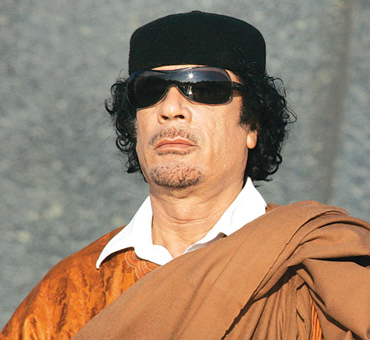
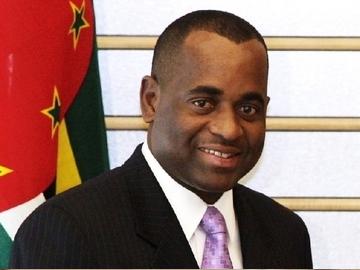
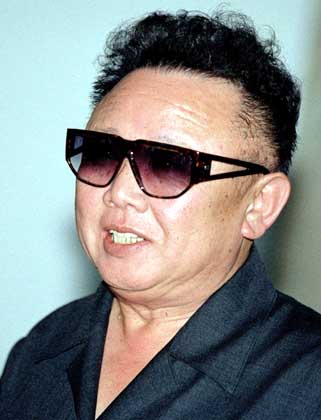
    gadhafi skerrit jong-il
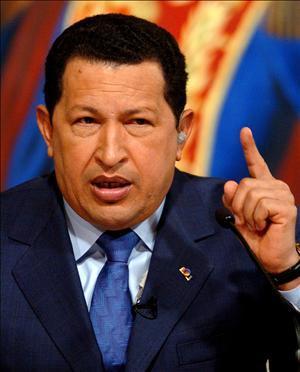
    chavez mugabe raul
    The above leaders have all pledged support for Gadhafi. Who's next?


    To say that uprising in Libya and Syria is a foreign plot is an insult to people who are fighting for their freedom

    Last Tuesday, in a joint statement, Iran’s President Mahmoud Ahmadinejad and his Venezuelan counterpart Hugo Chavez denounced what they called the West's “imperialist aggression” in Libya and Syria.

    It is a wonder they did not try and get Cuba’s retired President Fidel Castro or Robert Mugabe of Zimbabwe to endorse their condemnation. They would have certainly obliged. Back in March, Castro’s verdict on the Libyan uprising was that it was an American plot. Just over a week ago Mugabe called NATO “a terrorist group” because of its airstrikes against Qaddafi’s forces.

    The notion that the uprisings in Syria and Libya are a Western plot is not merely a gross distortion of the truth; it is a vicious slap in the face of ordinary Syrians and Libyans. They are the authors of the uprisings, not the Americans or the French or the British. The hundreds of thousands of Libyans who rose up against Qaddafi's iron grip on power and the young Libyans fighting, and dying, to free their country did not do so because of a foreign plot. They did so because they wanted to be free and were inspired by the uprisings in Tunisia and Egypt. They took their destiny into their own hands. It has been the same for the hundreds of thousands who have taken to the streets of Syria's cities, willing to die for freedom and, in some cases, doing so. The suggestion that they are agents in a plot devised by NATO and the CIA is an insult to them and the memory of the thousands who have been killed.

    In any event, if it were an American plot, it was one for which the Americans should be congratulated for getting their Middle East policies right for a change and doing something that was genuinely in tune with mass public sentiment.

    The fact that men like Chavez trot out this lie says everything about them and their politics and nothing about reality. They have a world view that is hopelessly outdated — a world divided into thieving imperialists and, battling against them, anti-colonialist liberation movements led by themselves. That has long gone. The world has moved on. But it is a vision these dictators are desperate to retain. It is their justification for their dead hand on the levers of power.

    The same was said by the ousted Egyptian President Hosni Mubarak of the protests in Egypt before he fell; they were organized by outsiders, he said. Qaddafi and Assad have come up with different villains behind the opposition to them — they accuse hard-liners — but the thinking is the same. They need someone to blame for the crisis and refuse to admit they are the problem.

    For all their populist rhetoric and their glorification of their “people's struggle” against “imperialism,” it is their own people that the likes of Chavez, Ahmadinejad, Qaddafi and Assad fear their most. So they come up with nonsense about foreign or terrorist plots.

    No one is taken in. The Syrians and the Libyans, like the Egyptians and the Tunisians beforehand, know that their uprisings are their alone, not something cooked up in the Pentagon. Others may support them, morally or with money or even arms and air raids, but the Arab Spring is a genuine Arab affair. Those who have to pretend otherwise show how little they understand the momentousness of what is happening.

    Source: Albawaba


  • Go to Home Page
  • Saturday, August 20, 2011

    Celebrating Life in Union

    A story of resilience and brotherhood.


    Our Story

    Celebrating Life in Union is a 90-minute documentary (in post-production) of human resilience, community, and brotherhood. It follows a group of former Cuban political prisoners through their memory of imprisonment, physical and mental tortures and their half-century fight with the aging Castro regime. Having developed a strong community for themselves that now crosses three generations in Union City, NJ they struggle with the realization that their own mortality may come before they can return to their homeland.


    Our intension is to give a platform to this group of courageous men and to send a message to the world that human rights and, and freedom of speech are a priceless commodity that should never be lost under any circumstance.

    What We Need & What You Get


    We have shot over 30 hours of footage in Union City New Jersey with these courageous men, their community, friends and families. We are in the post-production stage of the documentary. For this particular campaign we are trying to raise $3,500 for the post-production of the documentary.

    Each supporter that gives $1,000 will receive a single credit thank you title in the credits of the film, and a copy of the edited documentary.

    A $100 dollar donation gives each supported a copy of the edited documentary an invitation to events related to the documentary

    Supporters from $50 and up will receive a copy of the edited documentary.

    Supporters from $25 and up will receive special thanks from the producers, and information about the events related to the documentary.

    Other Ways You Can Help

    Please, please donate and get the word out. We need all the help we can get to finish and help. 

    Go to Campaign Home


  • Go to Home Page
  • Friday, August 12, 2011

    CUBA: The Disaster of Castro's Revolution


    This book, "CUBA: The Disaster of  Castro's Revolution", analyses the current situation existing in Cuba and describes in detail the real disaster caused in every aspect of Cuban life by the so-called revolution of Fidel Castro, including how it has affected the different components of Cuban society

    The author gives detailed summary of the main indicators of the Cuban economy and society before 1959, when Fidel Castro took power, indicating how they compared favorably at that time with other countries of the world, including many which are considered part of the developed world in our days. 

    The book demystifies numerous aspects of Castro's propaganda that his followers have considered as great achievements of his government and puts them in perspective in regard to what Cuba could have had nowadays if it had been ruled by democratically elected governments. The book profusely documents the system of corruption and privilege established in the island and analyses the obscure role of Castro in a number of important events related to the United States, including references to his links with drug traffic, money laundry and the promotion of terrorism activities, among other criminal activities. 

    One of the aspects the book describes in more detail is the lack of political freedom and the repression of independent thinking and free expression existing in the island, which is part of the overall control on everybody's life established by Castro, which is implemented by a gigantic machinery of terror and survelliance.

    The book describes the role of Cuban military and intelligence in numerous important events of world politics during the past five decades, including their role in Africa, Latin America and other regions of the world and it includes some questioning about the possible role of Castro in the assassination of President John F. Kennedy. It considers Castro's interpretation of foreign policy and the way he has disregarded all norms of international behavior. 

    The book also discusses the case of the enormous debt accumulated by Castro's government and how many of these resources have been deviated to well camouflaged foreign accounts and investments by Castro and some of the top people around him. 

    One of the interesting things about this book is the analysis it makes about the situation of youth, women and blacks within the present Cuban society and the detailed description about how the people in general live and how this has evolved under Castro's tyranny

    It also includes an analysis of the exiled Cuban community. Andres Solares discusses the real facts behind Castro's long tenure of power and shows the contradictions between what he and his supporters say and the crude reality of what happens in Cuba. His book also enters in details about the degrees of decomposition existing at all levels of the political establishment of this obsolete communist regime

    The book describes the enormous damage caused by Castro's policies to the environment of the island and the state of destruction of all the main networks of services, as well as the stagnant conditions of the economy. It includes the author's views on the different possible scenarios for Cuban political future, once Castro and his brother, one way or another, are no longer able to control Cuba. 

    This book is a strong denounce of the longest dictatorship that has existed in America and it serves as an eye opener for all those who ignore the crude reality of what happens in that beutiful country. It is also a moral message of hope for a better future for the Cuban people

    Mr.Solares has used his professional and personal experience, together with his direct knowledge of the Cuban society and economy, to give us a very intersting account of the situation in his country, which will serve those who read it to comprehend better what we can expect there.

    Available on Amazon: 


    About the Author


    Andres Solares is a former Cuban political prisoner, who was imprisoned for trying to create a new political party in the island to oppose Fidel Castro's policies. He was freed thanks to a worldwide campaign promoted by Amnesty International, America's Watch and Of Human Rights, the personal intervention of Senators Robert Dole and Edward Kennedy and the requests of the American Congress and British authorities. He is a Civil Engineer specialized in Economics in Great Britain and he lectured post-graduate courses on these subjects in Cuba. He has carried on and published numerous studies on Cuban matters. He lives in Miami with his wife Adriana and their children and family.


    Repression never stops in Cuba. Detention of the dissident Ivonne Mayesa Galano


    On Aug 5, 2011, Ivonne Mayesa Galano was detained (video) when she was heading to a meeting with other dissidents. She was beaten and kept in the Police Station for several hours without any formal charges. She was detained and beaten again last Monday, Aug 8.


  • Go to Home Page
  • Wednesday, July 27, 2011

    Media Fails to Report on Castro Regime’s Brutal Oppression

    The media often ignores the Gulag Next Door.

    Last week, just outside Cuba’s holiest Catholic shrine, government thugs attacked in plain daylight a group of opposition women — beating them, stoning them and stripping them naked to the waist. The women, mostly black and middle-aged, suffered this public humiliation because they were trying to find a dignified way to bring attention to the plight of their husbands, who are in prison for freely speaking their minds.


    The archbishop of Santiago de Cuba has condemned the attack. You can find an eyewitness account in Spanish in the above video.

    It should make for poignant watching today, the anniversary of the start of the Cuban Revolution.
    Unfortunately, there’s nothing unusual in this grotesque attack on the Damas de Blanco (or Ladies in White, the harassed association of wives of political prisoners) on the street outside the shrine of Our Lady of La Caridad del Cobre. It’s routine for Cubans to be publicly degraded, brutalized and imprisoned when they dare speak their minds. Their daily existence has been one of fear and wretched suffering for 50 years now.

    Yet the chances are that you probably haven’t heard about this story. A quick Google search of the attacks on the Damas de Blanco turned up only about five hits, none from a major publication. Why?

    Not because it’s a dog-bites-man story (literally, in this case), as some journalists might have you believe. No, it’s simply because the media don’t report the daily attacks on the Cuban dissidents.

    All the major international news wires, and at least two TV networks, have bureaus in Cuba. But they’re either so afraid of being expelled, or have so bought into the regime’s propaganda, that all they report is how Raul Castro is bringing economic reforms to Cuba.

    So little is the story of Cuba’s oppression known outside that island prison that, were the constant repression reported occasionally, it might actually cause a stir.

    Clearly, Raul—Fidel’s brother, who was handed the day-to-day reins of the island when his elder brother fell ill a couple of years back—has no intention of doing anything that will threaten communism’s firm grip on Cuba. Otherwise, his goons would feel no need to terrorize and drag a bunch of older women naked through the streets.

    What this dearth of news on the Gulag Next Door has produced is a strange double standard, where similar repression in far-away Burma, Zimbabwe or Libya — also by leftist regimes — gets far better coverage. Such is the ignorance of events in Cuba that MSNBC host Chris Matthews two years ago asked this question in an interview:
    Congressman Burton, why do you think Cubans on the island still support the Castro brothers? What is it that allows that lock on those people to continue?”
    Well, Chris, here’s your answer to what happens to Cubans when they try to pick that lock. Leaving Cuba is illegal, so you either stay silent, brave shark-infested waters on inner tubes (it is illegal to own boats in Cuba, for reasons that should be apparent), or risk suffering the fate of the Damas de Blanco.

    by Mike Gonzalez

    Source: Heritage


  • Go to Home Page
  • Monday, July 25, 2011

    The Cuban Way

    Part I: More Government, Less Food

    A Cuban beggar.

    When was the last time you wondered if you would be able to feed your family?

    Fortunately, for the majority of Americans, that thought never occurs, or is rarely a problem. If mom can’t cook the meal, there is always the local grocery store, fast food joint, or sit-down restaurant. Not so in Cuba.

    Yoani Sanchez, a Cuban blogger and author, has dedicated herself to shedding light on the day-to-day trials and tribulations in Cuba. Her newest book, Havana Real: One Woman Fights to Tell the Truth about Cuba Today, lifts the veil on everyday life in Havana, painting a vivid picture of the hardships of life under the Castro regime.

    One of the biggest struggles in Cuba is the government-inflicted food shortage. According to Sanchez, Cubans have an obsession with food. Not like America—where people can eat three hamburgers in a sitting or an entire pizza in one meal. Nor does this obsession include fine wine and perfectly seared steak. Instead, it is merely the dire necessity to have something to eat.

    Sanchez says that a Cuban meal often consists of rice with a beef or chicken bouillon cube. One little cube, she reflects, “make[s] me believe that my rice contains a tasty rib or a piece of chicken.” This simple bouillon cube is almost a delicacy in a market where spices and meats frequently run out.

    Why the shortage in food? The Cuban government promises to take care of every social need—including food. From cradle to grave, the Cuban government rations out food to its people, allowing only miniscule portions per family. Sanchez noted, “[I]f the 66 million pounds of rice they distribute every month, through the ration, were available to the free market, prices in the latter would go down.” But the government monopoly leaves prices high and food out of reach of hungry Cubans.

    In fact, the government-issued wages rise in accordance with increases in food prices. Since both prices and wages are set by the State, an increase in wages is generally offset by an increase in food prices.

    The state micromanagement of the Cuban agricultural sector causes the island to import 80 percent of the food it rations. Government rationing has been in place since 1962, and, “Contrary to popular belief, the Cuban ration system does not provide Cubans with ‘free’ food…Rations are limited to a paltry amount of a meager number of pathetic food-stuffs.” This forces many Cubans to find roundabout ways to acquire food.

    Another fact of Cuban life under socialism: Everyone except the upper echelon of the government heads for the black market.

    Purchasing from the Cuban black market is not done out of a desire to buck the system, but out of pure necessity. Sanchez wrote, “I can’t live a day without the black market.” Since the government refuses to provide certain services, such as repairing a washing machine or fixing the oven or shower, Cubans are forced to use or become underground workers. Sanchez noted that obtaining products as basic as eggs, milk, or cooking oil require a visit to the black market.

    A popular joke says Cuban communism has solved all but three problems: breakfast, lunch, and dinner. In reality, this is no joke. Life in Cuba is not easy, and it forces many to take extreme measures just to maintain their existence. But the Castro regime holds its citizens in the jaws of a dilemma where they “cannot both survive and comply with [Cuban] law, at the same time.”

    Want to see a government that promises to care for your every need? You don’t need to look farther than 90 miles south of the Florida Keys.


    Part II: Big Brother’s Repressive Hand

    Castro often uses thugs to repress the opposition.


    Big Brother of George Orwell’s 1984 still lives, and he’s right in our backyard. Yoani Sanchez has documented how Big Brother works through her depiction of the Cuban government in her new book Havana Real: One Woman Fights to Tell the Truth about Cuba Today.

    Cuban repression often takes the form of a group of thugs rather than the organized police. It targets people who are outspoken and harbor anti-regime opinions. Even Sanchez and her friends were kidnapped and beaten because of their blogging and their opposition to the Castro regime.

    Sanchez wrote, “How can I describe the despotic faces of those who forced us into that car [or] their visible enjoyment as they beat us.” Bruised and in pain, Yoani and her companions emerged from the kidnapping with emotional and mental wounds. The message is clear: Against us you have no rights; our power is limitless.

    Beyond kidnappings, Cubans are frequently imprisoned without warrant:
    Over the years, hundreds of prisoners of conscience have been imprisoned in Cuba for the peaceful expression of their views.… Harassment, intimidation, arbitrary detention and criminal prosecutions, all continue to be used to restrict the expression of views critical of the government.
    Government regulation of the Internet has severely limited Cubans’ ability to communicate with each other and the outside world. Twitter, Facebook, and even Sanchez’s blog, Generation Y, are blocked by Cuban authorities. Access is highly restricted as well. In Havana, many native Cubans must resort to dressing as tourists or speaking foreign languages just to get past the guards in Internet cafes.

    So what does Big Brother want? He wants a cadre of true believers who will run the party, the state, and the army as organs of repression. He wants worker bees who will labor for the glory of the hive. He wants other Cubans to remain apathetic and fatalistic.

    As Sanchez notes, “The person who complains or demands his rights is seen as ‘some kind of weirdo.’” Sanchez further observes a general malaise that can be seen through the Cuban choice of language. She says that phrases like “Don’t sweat it,” “You’ll give yourself a heart attack,” “Just ignore it,” and “That’s not going to accomplish anything” are sayings frequently heard in Cuban culture. Reflected in the language of many in Cuba is a worn-out spirit that has lost its will to fight for what truly matters: freedom.

    This the way the Castro brothers want it.

    By Olivia Snow

    Source: The Foundry


  • Go to Home Page
  • Tuesday, July 12, 2011

    Oh, Che Can You See?


    Recently I finished a book, Son of Hamas, written by Mosab Yousef.  Yousef was a Muslim who became a revolutionary for the cause of Christ.  His hatred for Israelis, which was fostered by his religious culture in the Palestinian areas of the West Bank in Israel, consumed him.  This prince of Hamas, however, encountered the Prince of Peace in Old Jerusalem.  A Christian invited Yousef to attend a Bible study.  From that invitation, Yousef's path led to a belief in Jesus Christ as the only source of true peace.

    At the end of the book Yousef lamented that Christians are not more involved in confronting the Islamic culture.  As he is risking his life to expose the dark workings of Islam, Yousef challenged Christians to do more to share the truth.  Simply praying about the situation can often be a cop-out.  Thinking about that challenge a moment I questioned: "What exactly does he want me to do?"  Then it occurred to me.  Although Yousef's context is confronting Islam, where I can passionately demonstrate truth was something I had to figure out for myself.  How can I effectively put my faith into action in America?

    Yousef's challenge to Christians came to mind as I was at the gym on the running track.  On the track I noticed someone (whom we'll call "Joe") wearing a T-shirt with Ernesto "Che" Guevara's image on it.  This cult of personality saddens and sickens me.  Guevara was a thug and a brutal murderer, and yet he is revered as if he were a war hero by many on the political left.  As I try to live by my motto scripture -- "Have nothing to do with the fruitless deeds of darkness, but, rather, expose them (Ephesians 5:11)" -- I knew I needed to say something to him.  I approached Joe as he was stretching on a mat.

    "I'm sorry to interrupt you, but I noticed you are wearing a T-shirt with Che Guevara on it."  Right then, I could tell by the look on Joe's face that others must have shared with him their opinions of Che.  He immediately put up the defenses.

    I tried to be as respectful as I could, yet remembering that "speaking the truth in love" still requires "speaking the truth."

    "Do you know who Che Guevara was?" I inquired.

    "I know he was a revolutionary," he offered, and then added "and I don't appreciate my free speech being questioned."

    "No, I'm not saying you shouldn't wear the shirt; I'm just trying to see if you know who he truly was.  Do you know any specifics of what he did?"

    "No, I don't know any specifics, but I know he was controversial," Joe admitted.

    "Well, Che was a very wicked man..."

    Joe interrupted.  "That's a matter of opinion."

    I continued.  "His revolutionary principles are completely antithetical to our American ideals.  He is not a man to be celebrated." 

    Joe again interrupted.  "That's a matter of opinion, and, if you please, I need to get back to my workout" -- a 15-minute workout that so far consisted of stretching, a few laps walking on the indoor track, and stretching again.

    I respectfully concluded, "I appreciate your taking the time to hear me, and maybe next time you will do more research."

    Here was a grown man, wearing the image of a mass murderer on his T-shirt.  All he cared to know about his idol, his hero, was that Guevara was "a revolutionary" and "controversial."  When confronted with my conclusion that Guevara was a wicked man that should not be celebrated, Joe only offered the relativistic refrain "It's just a matter of opinion."  He was not open to knowing the specifics.

    Relativism sounds wonderful and accepting.  "You can have your opinion and I can have mine."  But what is relativism, really?  Generally speaking, relativism is a philosophy that asserts all points of view are equally valid.  A relativist will likely aver that there is no absolute truth or that absolute truth is unknowable.  Both of those statements are self-refuting.  How can one absolutely believe there is no absolute truth?  How can one know the truth about truth being unknowable?

    The problem with relativists is they don't accept the consequences of their philosophy.  If truth really is relative, then why should a relativist get angry when I punch him in the nose?  His objection to my punching him is simply a matter of opinion, right?  I can have "my truth" and he can have his.

    Sure, everyone is able to have an opinion.  They may even be entitled to that opinion.  But, not all opinions are created equal.  The problem with opinions is that "Facts are stubborn things; and whatever may be our wishes, our inclinations, or the dictates of our passion, they cannot alter the state of facts and evidence."  The truth of John Adams' words resonates in our world that rejects absolute truth.

    Let us look at the facts that should have informed Joe the "Che-ophile's" opinion of Ernesto Guevara:

    • One murder is captured in Guevara's own diary in January 1957.  Guevara admitted that he shot Eutimio Guerra on suspicion of passing on information: "I ended the problem with a .32 caliber pistol, in the right side of his brain. ... His belongings were now mine."  Does "social justice" include execution without a trial and then theft of the estate?
    • Guevara murdered Aristidio, a peasant, simply because Guevara suspected him of treason to the revolution.  The killing of the poor, dumb cart horse named Boxer in Animal Farm comes to mind.
    • Guevara ordered the executions of hundreds of people without trial as the head of the La Cabaña prison.  Many were executed simply because they were Christians.  Refusing to serve two masters, many Christians died on Guevara's orders as they shouted "¡Viva Cristo Rey!"
    • Guevara ordered the murder of 15-year old Carlos Machado, his twin brother, and their father simply for resisting the revolution's confiscation of their family farm.
    • Guevara embraced hatred as a tactic necessary in his revolutionary struggle.

    For which one of these points was Joe displaying his pride in Guevara?  Relativism and blissful ignorance go hand-in-hand.  Hard-to-accept truth has simply become "a matter of opinion."  To the left, Guevara is a hero of the oppressed, a symbol to rally around for "social justice."  Many youth and other leftists celebrate Guevara's "revolutionary" and "controversial" nature without even the slightest curiosity of the truth of his ignominious life.

    The great danger with blissfully ignorant relativism is that if a majority of society falls for specially marketed, iconic, charismatic "revolutionaries," the entire nation suffers the purges and atrocities for the blessed revolution.  The Che T-shirt wearers in Cuba made it easier for the revolutionaries to execute the country's Machados and steal their farms. 

    Relativism crumbles as the light of truth exposes its deceptions.  Finding truth takes work.  Intellectual laziness is why there are so many liars and so many deceived.  In reality, relativism isn't about the existence of truth.  Truth isn't relative.  A person's will is relative.  Relativism really is a belief only in the truth one chooses to believe in.  All unpleasant, inconvenient truth is disregarded.  The philosophy of relativism is only created to excuse people's choices.  In Joe's case, relativism simply masks his intellectual ignorance.

    So, today, I took up Yousef's challenge and performed my Christian duty to expose the darkness of relativism.  I wasn't about to let Joe carry his blissful ignorance on his T-shirt unchallenged.  I don't know if Joe is blissfully ignorant or deliberately so.  I just know that I was called to bear witness to the Truth.  I hope I shined the light on Joe's darkness and that he embraces the light by researching and he sees who Che truly was...and then burns his Che T-shirt.

    By Christopher S. Brownwell 

    Source: American Thinker


    You Don't Know Che by Steve Pichan


  • Go to Home Page
  • Friday, June 24, 2011

    Cuba: Another Historiography Is Possible

    The Presidential Palace, built between 1913-1920. From 1965, the Museum of the Revolution. 

    Last Friday, I was talking with a young Honduran historian who was referring to Cuba’s Republican stage (1902-1959). She simplified that period by comparing it to how she sees Panama today: a paradise for gambling and sex but with a government that is failing to provide its citizens a dignified life.

    No matter how much revolutionary historiography has attempted to satanize Republican Cuba (attaching it with prefixes like “neo” or “pseudo to the noun “Republic”), it takes an effort to think this way by anyone who values logic and knows something about the history of Cuba.

    At least it takes some effort on my part, because for me the Cuban republic was not merely an American backyard for gambling and prostitution. There were also institutions here that for their seriousness and quality earned an esteemed place in the memory of our senior citizens.

    These were such that I’ve yet to meet an elderly elementary school teacher who doesn’t speak of their career without concluding with the sentence: “Us, yes, we are true teachers!” in an obvious critique of educators created by the revolutionary government.

    That republic of “players and prostitutes” also gave humanity numbers of people of international stature, such as the world champion of chess (Jose Raul Capablanca) and of boxing (“Kid Chocolate”). And I have to say that if Cuba still cannot point to a Nobel Prize winner from that time, it was simply because the sponsors and organizers of that award considered it undue to grant such a distinguished medal to a Latin American.

    It’s worth clarifying that despite the fact that the Swedish academy never granted Dr. Carlos J. Finlay the award, it did indeed nominate him for it on at least six occasions. This was an award that he clearly deserved because of his discovery of the Aedes aegypti mosquito as being the transmitting agent of yellow fever, thus saving hundreds of thousands of lives, which in an ironic twist of destiny also facilitated the completion of the Panama Canal.

    Another republic quite removed from the casinos and brothels was the one that grouped itself around Cuban intellectuality. Here at least three true erudite circles existed: the liberal, the Catholic and the socialist one, each led by a caliber of intellectuals at the continental level – people such as Jorge Mañach, Jose Lezama Lima and Juan Marinello, each also with their own identity and way of thinking about Cuba.

    From their respective political positions, and throughout the entire period of the republic, these cultivated circles that knew how to maintain intense, respectful and enriching dialogues on the issues that affected the nation, a matter that has been excessively downplayed in today’s Cuban academic and cultural panorama.

    That republic, which my Honduran friend automatically compared to the worst part of Panama, she also defined as “of little importance” also had one of the most important architecture schools on the continent. This was where architects like Nicolas Quintana (who died recently in Miami), Havana resident Mario Coyula and many others designed and built in barely a half a decade (1953-1958) two of the most emblematic neighborhoods in Havana and in Cuba: Vedado and Miramar.

    It goes without saying that this Cuba, so “ill-favored” and full of thugs (according to national historiography), had the first Latin American Olympic champion: fencer Ramon Fonts (1904).

    It’s also worth remembering the important role that Cuba would play in the technological development of the region. The first Latin American airborne journey was carried out by a Cuban, Agustin Parla. The 1913 flight lasted almost three hours as that pilot traveled between Cayo Hueso (U.S.A.) and the town of the Mariel, west of Havana.

    Even rights such as divorce — so trying and difficult to understand for sexist Ibero-Americans at the beginning of the 20th century — was accepted in our country as early as 1918.

    In terms of other women’s rights, the first feminist movement in Ibero-America appeared at the end of the 1930’s in Cuba, thirty-six years ahead of the movement in Spain, for example.

    Other important facts that my friend should know is that in 1937 Cuba decreed, for the first time in Ibero-America, laws for the eight-hour work day, the minimum wage and university autonomy.

    In 1940 a constitution was adopted which was the first one in Ibero-America that approved the right of women to vote, equal rights for different sexes and races, and women’s right to work.

    In 1951 the Riviera Hotel became the first in the world to have central air conditioning.

    In terms of our agrarian culture, my friend should also know that in 1954 Cuba succeeded in producing one head of cattle for each resident, with the Cuban population back then numbering around six million people.

    It would also be worthwhile to recognize that in 1956 the UN recognized Cuba as the number two country in Latin America in terms of its literacy index, with its illiterate population consisting of only 23.6 percent – well above Spain’s illiterate population of 60 percent.

    In 1957 Cuba was recognized by the UN as the leading Ibero-America country in terms of its number of doctors per capita (1 for every 957 residents).

    In 1958 Cuba ranked as the second country of the world in the percentage of households with color television and it was the third in the world to establish a color TV station.

    In 1958 Cuba was the Ibero-American country with the most automobiles (160,000, or one for each 38 residents).

    I also feel it my duty to tell my friend that in 1959, Havana led the world by being the city with the most movie theaters (358), even surpassing cities like New York and Paris.

    In conclusion, I would like to let my friend know that I don’t have anything personal against our fine Panamanian sisters and brothers, nor do I believe that she does. Still, I would like to know if she still thinks the same after this brief review of the data on the Cuban Republic.

    Alfredo Fernandez Rodriguez

    Source: Havana Times 

    Related: Clouds in my Cuban coffee 


  • Go to Home Page