Showing posts with label Iran. Show all posts

Friday, October 14, 2011

Cuba, Venezuela pose subtle, but real dangers to United States

Havana Malecon, summer 1994

This bicoastal discussion with a colleague began on Twitter. We are often — to avoid the absolutes — on different sides of most issues. This one exchange over the weekend was no different.

We were tweeting along, disagreeing respectfully, when she came up with a question that was difficult to answer in 140 characters. What danger do Cuba and Venezuela represent to the United States?

This was not a question of human rights, or of democracy, or even of communism. The question was simple and direct. I was stumped, particularly when limited in space. I have to admit that, in that Twitter conversation, I was check-mated.

This is why I resort to a lengthier format; one in which I am more comfortable in responding to my colleague.

Cuba and Venezuela do represent a serious dangers to the United States, but not directly in a militaristic way.

Cuba did at one point represent a very real danger to the United States — during the 1962 Missile Crisis, when armed with Soviet missiles the world came closer than ever to a nuclear war. That, however, was almost five decades ago — it will be 50 years ago in October 2012. Certainly, that is not the case now.

Still both Cuba and Venezuela, each in its own way, present a real and present danger to the United States today. No, the danger is not of a military invasion, or of terrorists attacking this country, or even of invading other countries in the region. Still, they represent a real and present danger to this country in many other ways.

First, let's start with Cuba. The Cuban regime has repeatedly used its people as weapons against the United States. It has done so at least three times, and could do it again at any point as a way of relieving the pressure from its failed economy. South Florida felt the brunt of its fury in the 1960s when Fidel Castro opened the Port of Camarioca in 1965, forcing the United States to adopt an orderly flow of exiles from Cuba that brought 270,000 Cubans to the United States over the next seven years.

Fifteen years later, Castro did it again when he opened the Port of Mariel and allowed 125,000 Cubans to cross the Florida Straits in less than five months. And in the mid-1990s, he allowed more than 33,000 people to flee on rafts in a few short weeks.

Back in the 1980s, then-Ambassador Victor Palmieri, director of Refugee Affairs in the State Department when Jimmy Carter was president, wrote in an unpublished paper that Mariel had been "an act of war." And this is a weapon Cuba can always use on the United States to test the will of a U.S. president.

Venezuela and Hugo Chávez, Castro's most advanced disciple, represent an enormous danger to U.S. diplomacy in the region. In much the same way that Castro tried to oust regimes in Latin America by helping guerrilla movements, Chávez now is the chief financial officer of the movement to elect socialist leaders in countries to set up an anti-American block in Latin America. For starters, we can talk about Evo Morales in Bolivia, Rafael Correa in Ecuador and Daniel Ortega in Nicaragua. All have been helped by Chávez, whose petrodollars feed anti-American sentiment in the region.

Cuba and Venezuela still support Iran, as well as Libyan dictator Moammar Gadhafi, who is now probably fighting for his life in the city of Serta against Libyans rebelling against his regime. They also back the Palestinian effort to be recognized as a nation, and quietly oppose the state of Israel.

Furthermore, Venezuela's armed forces have billions in new weapons purchased from Russia to please its generals, who are now heavily Involved — albeit secretly — in the drug trade. As Colombian rebels have lost power, it has moved across the border to Venezuela where its own armed forces supervise the drug trafficking to Europe and the United States.

The elected authoritarian regimes rising in Bolivia, Ecuador and Nicaragua are not a direct danger to the United States. They do represent, however, represent a danger to the freedoms of people in the hemisphere. Freedom of the press and human rights are constantly violated in these countries. People live in fear of their governments and thousands have been forced to flee their homeland.

But no, none of this represents a clear and direct danger to the United States; just to the type of government we would like our neighbors to our south to have. So point, set and match go to my colleague on the West Coast. Or does it?

By Guillermo I. Martínez

Source: Sun Sentinel 


  • Go to Home Page
  • Thursday, September 1, 2011

    Report: Hezbollah opens base in Cuba

    Hezbollah flag.

    Shiite terror group to use operations center to launch attack on Israeli target in South America, Italian newspaper reports.

    Hezbollah has established a center of operations in Cuba in order to expand its terrorist activity and facilitate an attack on an Israeli target in South America, Italian newspaper Corriere della Sera reported.

    According to Yedioth Ahronoth, the attack is meant to avenge the death of Hezbollah commander Imad Mughniyah. The organization alleges that Israel was behind his 2008 assassination.

    According to the report, three Hezbollah members have already arrived in Cuba with the purpose of establishing a terrorist cell there. The cell is to include 23 operatives, hand-picked by Talal Hamia, a senior member tasked with heading the covert operation

    The operation, titled "The Caribbean Case," was reportedly allocated a budget of $1.5 million. The Cuba base is to be initially used for logistics purposes, including intelligence collection, networking and document forgery.

    Hezbollah has been active in South America for quite some time now, primarily in Paraguay, Brazil and Venezuela, the report notes.

    Source: Ynetnews


  • Go to Home Page
  • Monday, August 22, 2011

    Is the people who are changing things. Tyrants beware!

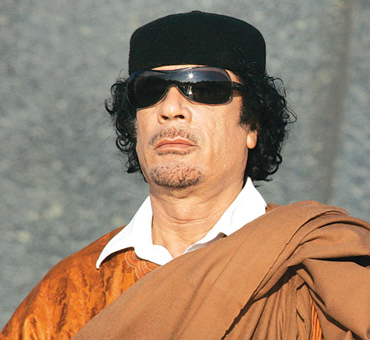
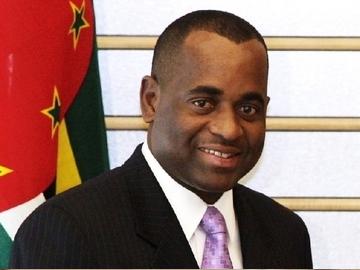
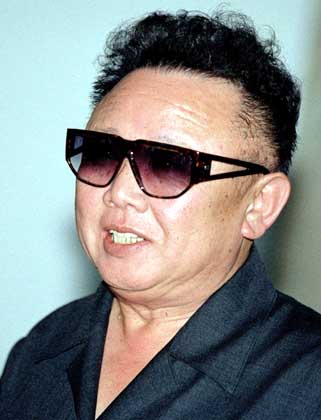
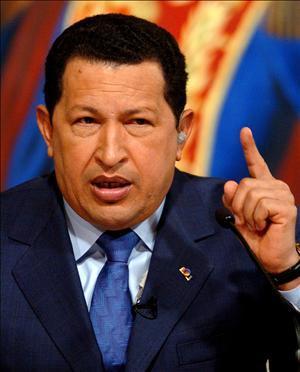
    gadhafi skerrit jong-il
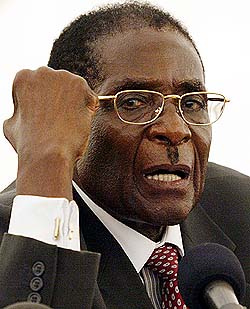
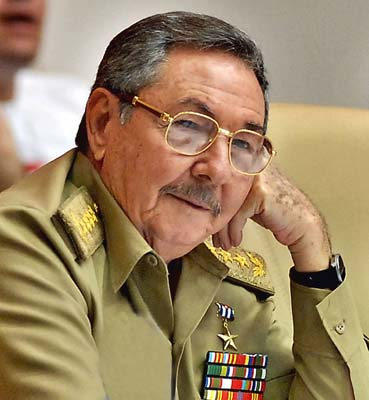
    chavez mugabe raul
    The above leaders have all pledged support for Gadhafi. Who's next?


    To say that uprising in Libya and Syria is a foreign plot is an insult to people who are fighting for their freedom

    Last Tuesday, in a joint statement, Iran’s President Mahmoud Ahmadinejad and his Venezuelan counterpart Hugo Chavez denounced what they called the West's “imperialist aggression” in Libya and Syria.

    It is a wonder they did not try and get Cuba’s retired President Fidel Castro or Robert Mugabe of Zimbabwe to endorse their condemnation. They would have certainly obliged. Back in March, Castro’s verdict on the Libyan uprising was that it was an American plot. Just over a week ago Mugabe called NATO “a terrorist group” because of its airstrikes against Qaddafi’s forces.

    The notion that the uprisings in Syria and Libya are a Western plot is not merely a gross distortion of the truth; it is a vicious slap in the face of ordinary Syrians and Libyans. They are the authors of the uprisings, not the Americans or the French or the British. The hundreds of thousands of Libyans who rose up against Qaddafi's iron grip on power and the young Libyans fighting, and dying, to free their country did not do so because of a foreign plot. They did so because they wanted to be free and were inspired by the uprisings in Tunisia and Egypt. They took their destiny into their own hands. It has been the same for the hundreds of thousands who have taken to the streets of Syria's cities, willing to die for freedom and, in some cases, doing so. The suggestion that they are agents in a plot devised by NATO and the CIA is an insult to them and the memory of the thousands who have been killed.

    In any event, if it were an American plot, it was one for which the Americans should be congratulated for getting their Middle East policies right for a change and doing something that was genuinely in tune with mass public sentiment.

    The fact that men like Chavez trot out this lie says everything about them and their politics and nothing about reality. They have a world view that is hopelessly outdated — a world divided into thieving imperialists and, battling against them, anti-colonialist liberation movements led by themselves. That has long gone. The world has moved on. But it is a vision these dictators are desperate to retain. It is their justification for their dead hand on the levers of power.

    The same was said by the ousted Egyptian President Hosni Mubarak of the protests in Egypt before he fell; they were organized by outsiders, he said. Qaddafi and Assad have come up with different villains behind the opposition to them — they accuse hard-liners — but the thinking is the same. They need someone to blame for the crisis and refuse to admit they are the problem.

    For all their populist rhetoric and their glorification of their “people's struggle” against “imperialism,” it is their own people that the likes of Chavez, Ahmadinejad, Qaddafi and Assad fear their most. So they come up with nonsense about foreign or terrorist plots.

    No one is taken in. The Syrians and the Libyans, like the Egyptians and the Tunisians beforehand, know that their uprisings are their alone, not something cooked up in the Pentagon. Others may support them, morally or with money or even arms and air raids, but the Arab Spring is a genuine Arab affair. Those who have to pretend otherwise show how little they understand the momentousness of what is happening.

    Source: Albawaba


  • Go to Home Page
  • Monday, March 7, 2011

    Czech MEP meets dissidents in Cuba

    Last week, twenty members of the Ladies in White were heckled for several hours by government supporters, who kept them encircled in the area. Surrounding streets were blocked off, and two ambulances and several police cars were stationed nearby.
    The atmosphere in Cuba is like a pressure cooker that can explode at any time, Cuban dissident Guillermo Farinas told Czech MEP Edvard Kozusnik, who met him briefly after his release from prison last week, Kozusnik said in a report he sent to CTK last Sunday.

    Last year, Kozusnik successfully nominated Farinas for the Sakharov Human Rights Prize.

    The public opinion in Cuba is changing as the public increasingly connects economic problems with the existing regime, Farinas said.

    Nowadays people speak about it publicly, which was absolutely unthinkable three years ago, he added.

    Kozusnik came to Cuba to support the local opposition in its effort to change the Communist regime.

    Earlier this week, Farinas was imprisoned for 36 hours, Cuban dissidents have said.

    Another Cuban dissident Oswaldo Paya has warned that repressive forces are ready to take any steps in order to keep current Cuban Communist leaders in power.

    Paya said Cuban opposition was preparing projects for the transformation of society in the direction of democratic free elections.

    Kozusnik said Paya and others had collected the signatures of 40,000 Cubans for the support of the planned changes.

    Kozusnik said the campaign was similar to the Czechoslovak Several Sentences petition, launched a few months before the Communist regime's fall in 1989.

    Kozusnik gave the dissidents a symbolical chain of keys as a recollection of those that calmly rang the end of the Communist rule.

    "I believe that Cubans will soon ring the end of the rule of arrogant despots, dysfunctional economy, demagoguery and hateful propaganda," Kozusnik said.

    From the Czech experience:

    Seeking Freedom Is a Learning Process


    He has a degree in history, which he got only after the revolution of course.

    In communist times he was only allowed to undertake a mechanical apprenticeship.

    In literature he found a way to pass on principles of humanity and criticize injustice.

    He belonged to the crowd of the youngest generation of Czech dissidents.

    We are talking about Czech writer Petr Placák, alias Petr Zmrzlík.

    [Jáchym Topol, Writer and Journalist]:

    "Before 1989 Petr belonged to the active ones, to the activists, to those who fought. I think, that what he was doing or what we were doing, was built on Charter 77."

    Placák issued two samizdat books.

    As one of the closely watched dissidents, he was forced to write books under the pseudonym Petr Zmrzlík.

    He became an inconvenience for the regime not only as a writer, but as an instigator of many activities against the totalitarian regime as well.

    In 1988 he founded an organization "České děti" which issued leaflets and articles directed against the totalitarian regime.

    [Jáchym Topol, Writer and Journalist]:

    “I was one of the first members of the organization 'České děti.' And I can say that the thoughts and ideas coming from Petr’s head fell on fertile ground.”

    As an editor-in-chief of the magazine “Babylon," Petr Placák is now guiding today’s young authors to learn the real values in society.

    [Stanislav Skoda, Editor, Babylon Magazine]:

    "We try to publish texts we write ourselves, they are about violations of freedom in the world, in Cuba, for example. I specialize mainly in Latin America as well as in China, in Burma and we’re just trying to find and point to the iniquities that are happening in a small town in the north of Czech Republic as well as in Beijing."

    Placák first experienced the limiting of freedom in his childhood.

    He was four years old when his native city Prague was occupied by the Red Army troops.

    [Petr Placak, Writer]:

    "Through the adults I understood that what was happening was horrible. And then it was increasing continuously. I mean the distance against the regime was more and more clear. And it still is actually getting clearer because when you read about it, you get more information. So it is a process that is still developing."

    Petr Placák believes that people develop their opinions all their lives.

    [Petr Placák, Writer]:

    "When one is growing up, he is growing up in a way that he defines himself from his environment. Then of course, he is processing it further on but I think this is the fundamental of it when he is growing up."

    Sources:  NTD News and Prague Dialy Monitor


  • Go to Home Page
  • Wednesday, November 24, 2010

    Netanyahu Clarifies His Praise of Castro

    Binyamin Netanyahu
    Prime Minister Binyamin Netanyahu has called a U.S. congresswoman in order to clarify his recent praising of comments made by former Cuban leader Fidel Castro, AP reported.

    In a recent interview with journalist Jeffrey Goldberg of Atlantic Magazine, Castro had acknowledged that Jews have been persecuted more than any other people. He also attacked Iranian President Mahmoud Ahmadinejad for his denials of the Holocaust.

    In response to Castro’s comments, Netanyahu said he was full of admiration for the former Cuban leader and added that Castro's remarks show his deep understanding of the history of the Jewish people and the State of Israel.

    President Shimon Peres also praised Castro and sent him a personal message in which he wrote: “Your unexpected words comprise a kind of surprising bridge between a difficult reality and a new horizon. This is proof that those distant from one another can be close.”

    Ileana Ros-Lehtinen
    The kind words, however, were less than pleasing for Florida Representative Ileana Ros-Lehtinen. Lehtinen, a Republican who has represented Florida's 18th congressional district since 1989, is a Cuban exile and fierce critic of Castro. She is also the top Republican on the House Foreign Affairs Committee and a strong supporter of Israel and is therefore considered a key player for Israel.

    During a recent conversation with Politico, Ros-Lehtinen said that she had expressed her dismay over the pro-Castro comments. “I just said look, this guy has been an enemy of Israel, just because he said something that a normal person would say — after 50 years of anti-Israel incitement, it’s one phrase from an old guy who doesn’t even know where he’s standing.”

    Netanyahu subsequently called Ros-Lehtinen to clarify his position on Cuba and Castro. AP quoted a statement from Netanyahu's office which said that "in response to questions," Netanyahu had called the Ros-Lehtinen and said that his comments were limited only to Castro's remarks about Israel and the Holocaust

    by Elad Benari

    From: Arutz Sheva.

  • Go to Home Page
  • Wednesday, September 29, 2010

    Kudos to Castro

    Castro back in the old days with his friend Yasser Arafat
    Palestine and Iran are giving nothing to Castro. Not anymore. Their political support has little value and the economical is non existent. And Israel has money. Jews have money. It's time to change sides, maybe people would not remember "little" mistakes from the past. 

    Israel should rejoice in Castro’s holiday gift of a positive message on Israel, which might just mark the beginning of a trend.

    A belief in the capacity inherent in every individual to fundamentally change for the better is one of Judaism’s most important and redeeming tenets.

    The recent Day of Atonement is the annual apex of that notion, and penitents are welcomed into society and revered as bearing more rights than virtuous people.

    It is tempting to view former Cuban dictator Fidel Castro as now being repentant of his longtime sin of backing those who act toward the eradication of Israel, following the support of the Zionist entity he expressed in a recent interview with The Atlantic’s Jeffrey Goldberg, in which the aging revolutionary also criticized Iranian President Mahmoud Ahmadinejad for his repeated Holocaust denial.

    “Yes, without a doubt,” was Castro’s unambiguous answer to Goldberg’s inquiry as to whether he thought Israel has a right to exist as a Jewish State. The Cuban leader, who passed over the presidency to his brother Raul in 2008 but remains First Secretary of the Communist Party of Cuba, also expressed understanding of how the history of persecution of Jews, most notably the Holocaust, would influence Prime Minister Binyamin Netanyahu’s decision-making process, and even noted his desire to meet with the premier’s father Ben-Zion, the leading historian of the Spanish Inquisition.

    President Shimon Peres issued a warm letter to Castro over the weekend with gratitude for the “moving” and “unexpected” words that bore “an original and unique intellectual depth.” And a Prime Minister’s Office’s statement defined what Castro had said as a testimony to his “deep understanding of the history of the Jewish people and Israel.”

    ONE NEED not be a great historian like Netanyahu Sr., however, to recall Cuba’s anti-Israel track-record under Castro. In 1967, Cuba’s ambassador to the UN described Israel’s preemptive attack against the onslaught of Arab armies in the Six Day War as “a surprise attack in the Nazi manner,” and Havana’s military advisers provided instruction to PLO terrorists both in Cuba and in southern Lebanon in the seventies and early eighties. Diplomatic relations with Israel were cut in 1973 after Castro sent Cuban tank commanders to join Syrian forces in the Yom Kippur War, and Cuba remains on the State Department’s list of state sponsors of terrorism.
    I'm just following the money baby...
    In fact, one needn’t be a historian at all to encounter a revolting diatribe the same Castro, still idolized by the extreme Left in Europe and Latin America that often does not recognize Israel’s right to exist, published on June 10 on his CubaDebate website.

    “The state of Israel’s hatred of the Palestinians is such that they would not hesitate to send one and a half million men, women and children from that country to the gas chambers in which millions of Jews of all ages were exterminated by the Nazis,” he wrote just a few weeks before his interview with The Atlantic, following the IDF raid on the Gaza-bound flotilla. “The Führer’s swastika would seem to be Israel’s banner today. This opinion is not born of hatred,” Castro continued, noting his country’s history of absorbing Jews during “the harsh days of World War II.” (Cuba’s Jewish community has since dwindled, from an estimated 15,000 in 1959 to a current 1,000 or so.) Interpreting the inner workings of the mind of this 84-year-old, who might or might not be rethinking his long-time stance on Israel, may be beyond us at this stage. But whatever his motivations, the very day after the initial segment of the interview was published on The Atlantic’s website on September 7, Venezuelan President Hugo Chavez declared he’d be meeting with the leaders of his country’s Jewish community.

    Chavez, who considers Castro an influence and has close ties with Ahmadinejad, a week later indeed heard the Jewish leaders’ concerns over anti-Semitism in the state media and their desire to see diplomatic ties with Israel, which Chavez cut in 2009, reinstated.

    Castro’s standing as the radical Left’s elderly statesman puts him in a unique position to generate a move toward making pro-Israel sentiment somewhat fashionable, or at least to help distance anti-Semitism from the realms of the political discourse. Without forgetting his problematic past, and accordingly without attributing uncritical weight to this refreshing draft from the Caribbean, Israel should rejoice in Castro’s holiday gift of a positive message on Israel, which might just mark the beginning of a trend.


    Source: JPost

  • Go to Home Page
  • Thursday, September 9, 2010

    Cuba's Soviet-style economic model no longer workable: Castro

    This way! Or, maybe the other way...
    London, Sept. 9 : Former Cuban leader Fidel Castro has said that Cuba''s Soviet-style economic model "doesn't even work for us anymore".

    In an interview to the Atlantic Monthly magazine, Castro said that the modest reforms introduced by his brother, President Raul Castro to stimulate his country’s troubled economy, appeared to be a step in the right direction.

    Castro also criticized Iranian President Mahmoud Ahmadinejad for anti-Semitism and denying the Holocaust.

    He criticized his own actions during the 1962 Cuban Missile Crisis when he urged the Soviet Union to launch nuclear weapons against the United States, telling Goldberg "it wasn''t worth it at all." (ANI)

    From: Top News


    Fidel Castro : "Cuban model doesn't work"


  • Go to Home Page