Showing posts with label doctor. Show all posts

Friday, August 26, 2011

Would-be Cuban defectors from Guyana face tough times- Wikileaks


Several Guyana-based Cuban doctors, who wanted to defect to the United States, had fled the airport and gone into hiding, fearing that Guyanese and Cuban officials would have tracked them down and return them to Cuba, a cable released by Wikileaks has revealed.

Having worked for meagre salaries and unable to save enough, they usually have to endure months of waiting to know whether their parole applications are approved.

Six Cuban doctors had gone into the United States embassy and were interviewed for Signficant Public Benefit Parole under the Cuban Medical Personnel program.

“Three of the pending applicants are in hiding, reporting that they cannot move freely for fear that Guyanese police or Cuban embassy personnel may apprehend them and repatriate them to Cuba,” the cable stated back then.

One of the doctors complained that the Cuban government canceled his passport after he refused to board a plane to ostensibly accompany a six doctor back to Cuba. He told the US embassy that he felt that he was being tricked after Cuban authorities might have been informed that he had visited the American embassy here to request parole.

“The applicant refused to board the plane because of a hunch that he was being tricked into repatriating himself. Subsequently, Cuban Embassy authorities told him that his passport would be canceled immediately. They also removed him from the medical brigade and labeled him a deserter,” the cable states.

The Wikileaks cable also reveals that Cuba had dispatched a new manager to Guyana in December 2006, aimed at cracking down on Cuban medical personnel who have intentions to request parole or flee Guyana.The revelation, which is contained in a March 30, 2007 cable from the US embassy here to the State Department, appears to confirm previous news media reports that the Guyana government has taken a policy not to grant citizenship to Cuban doctors who refuse to return to Havana even if they marry Guyanese. The embassy reported to the State Department that the renewal of the doctor's visa is done done six months prior to the conclusion of their medical mission so that the termination of their legal status will coincide with their repatriation to Cuba.

The cable notes that Cuban medical personnel who apply for parole are ostracized. Any Cuban medical professional who maintains communication with parole applicants is at risk of losing his/her legal status in Guyana and job with the medical brigade.

The embassy said three of the parole applicants told the Consular Officer that upon arrival in Guyana members of the Cuban Medical Brigade are forced to surrender their passports and they are returned just before they are about to board the plane to return to Cuba at the end of their two-year stint. Those who went to the embassy with their passports said they fled the Cheddi Jagan International Airport and went into hiding after they were chased.

“The applicants that came to the Embassy with their passports risked arrest by fleeing from the airport rather than returning to Cuba. They reported that "official-looking" people chased them as they ran to a taxi and drove away from the airport. They went into hiding until they felt safe enough to come to the U.S. Embassy to file an application for parole,” states the cable.

The embassy told the State Department that the Cuban doctor who was approved for parole was hesitant to travel because he feared for the safety of his female colleagues whose applications had been still pending. Three of the pending applicants had been in hiding and had reported that they could not have moved freely for fear that Guyanese police or Cuban embassy personnel might have apprehended them and repatriated them to Cuba.

“All of the parole applicants expect their families in Cuba to be targeted for reprisals because of their failure to return to Cuba after the completion of their mission,” the cable added.

The embassy said that Cuban applicants for parole told them that the only reason that the US embassy in Guyana does not receive many more parole applications is that they are terrified of being seen entering the U.S. Embassy. Consular Officers, according to the cable, sense that Cuban medical personnel are willing to take the risk of requesting parole; however once they do, they are faced with months of delay and uncertainty. “Since many applicants are requesting parole after they have completed the medical mission, they are no longer legally employed and unable to subsist on their meager savings while awaiting a decision from the Department of Homeland Security that can take months to process.

Against the backdrop of meager funds on which to live, the cable states Cuban medical personnel who have applied for parole rely on former colleagues for assistance. “Presently, they rely on the assistance that some former colleagues are willing to give them at much risk to their own status.”

“Local charities can offer very little assistance to political refugees. Moreover, every time the applicants have to leave their hiding place to ask for assistance, they risk detention and deportation because of their lack of status,” the cable adds.

Cuban medical personnel, the cable states, receive very low wages compared to their Guyanese counterparts, and their contracts require them to relinquish fifty percent of any overtime pay to the Central Unit for Medical Cooperation (UCCM) in Havana. The Cuban doctor's monthly salary is equivalent to US$500 from which US$100 is deducted on a monthly basis and contractually remitted back to the UCCM. Overtime is accumulated at the rate of US$1.25 per hour, and doctors on the overnight shift make US$2.50 per night. In comparison, Guyanese doctors typically make US$1,500 per month.

Source: Demerarawaves


  • Go to Home Page
  • Saturday, January 8, 2011

    Cables spotlight health system woes in Cuba

    Doctor's workplace in one of the Cuban hospitals.
    In one Cuban hospital, patients had to bring their own light bulbs. In another, the staff used "a primitive manual vacuum" on a woman who had miscarried. In others, Cuban patients pay bribes to obtain better treatment.

    Those and other observations by an unidentified nurse assigned to the U.S. diplomatic mission in Havana were included in a dispatch sent by the mission in January 2008 and made public last month by WikiLeaks.

    Titled "Cuban health care: Aqui Nada es Facil" — nothing here is easy — the cable offers a withering assessment by the nurse, officially a Foreign Service Health Practitioner, or FSHP, who already had lived in Cuba for 21/2 years.

    The Cuban government still boasts of its vast public health system, though the system suffered deeply after Soviet subsidies ended in 1991. It also blames most of the system's problems on the U.S. embargo. Though U.S. medical sales to Cuba are legal, the process can be cumbersome and Havana can sometimes find better prices elsewhere.

    The U.S. cable is not an in-depth assessment of Cuba's health system. Rather, it's a string of anecdotes gathered by the FSHP from Cubans such as "manicurists, masseuses, hair stylists, chauffeurs, musicians, artists, yoga teachers, tailors, as well as HIV/AIDS and cancer patients, physicians, and foreign medical students."

    At one OB-GYN hospital, the dispatch reported, the staff "used a primitive manual vacuum to aspirate" the womb of a Cuban woman who had a miscarriage "without any anesthesia or pain medicine. She was offered no . . . follow up appointments."

    A 6-year old-boy with bone cancer could only be visited at a hospital by his parents for "limited hours," the cable added.

    Cancer patients receiving chemotherapy or radiation get "little in the way of symptom or side-effects care . . . that is critically important in being able to continue treatments, let alone provide comfort to an already emotionally distraught victim," the dispatch noted.

    "Cancer patients are not provided with, nor can they find locally, simple medications such as Aspirin, Tylenol, skin lotions, vitamins, etc.," it added.

    HIV-positive Cubans have only one facility, the Instituto Pedro Kouri in Havana, that can provide specialty care and medications, the cable noted. Because of transportation problems and costs, some patients from the provinces may be seen only once per year.

    Kouri institute patients can wait months for an appointment, "but can often move ahead in line by offering a gift," the dispatch added. "We are told five Cuban convertible pesos (approximately USD 5.40) can get one an x-ray."

    Although the practice was reportedly discontinued, some HIV-positive patients had the letters "SIDA" (AIDS) stamped on their national ID cards, making it hard for them to find good jobs or pursue university studies, according to the cable.

    The cable acknowledged that medical institutions reserved for Cuba's ruling elites and foreigners who pay in hard currencies "are hygienically qualified, and have a wide array of diagnostic equipment with a full complement of laboratories, well-stocked pharmacies, and private patient suites with cable television and bathrooms."

    Hospitals and clinics used by average Cubans don't come close, the dispatch added, providing details on the FSHP's visits to four Havana hospitals:

    At the Hermanos Ameijeiras Hospital, part of which is reserved for foreign patients and was featured in the Michael Moore documentary "Sicko," a "gift" of about $22 to the hospital administrator helps average Cubans obtain better treatment there. The exterior of the Ramon Gonzalez Coro OB-GYN hospital was "dilapidated and crumbling" and its Newborn Intensive Care Unit was "using a very old infant 'Bird' respirator/ventilator _ the model used in the U.S. in the 1970s."

    During a visit to the Calixto Garcia Hospital, which serves only Cubans, the U.S. nurse "was struck by the shabbiness of the facility . . . and the lack of everything (medical supplies, privacy, professional care staff). To the FSHP it was reminiscent of a scene from some of the poorest countries in the world."

    At the Salvador Allende Hospital, the emergency room appeared "very orderly, clean and organized." But the rest of the facility was "in shambles" and guards by the entrance "smelled of alcohol."

    "Patients had to bring their own light bulbs if they wanted light in their rooms. The switch plates and knobs had been stolen from most of the rooms so one had to connect bare wires to get electricity," the dispatch reported.


  • Go to Home Page
  • Tuesday, December 28, 2010

    Useful idiots, PBS edition

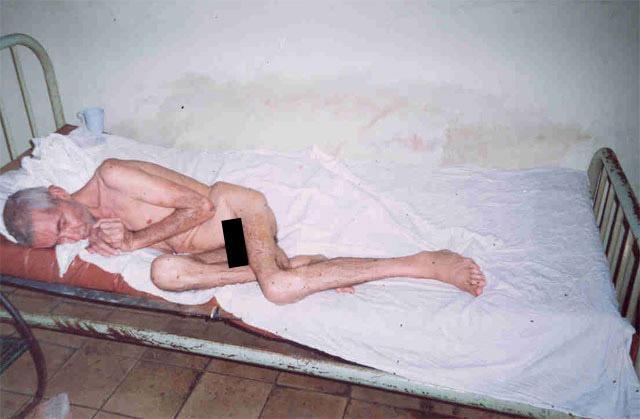
    "Free" health care may look like this. Picture from a Cuban medical facility.
    One would have thought we were well past the day when the the folks at PBS would be shilling for Castro and Communism, but one would be wrong. Mary Anastasia O'Grady brings us a remarkable example of Castroite stupefaction in her Wall Street Journal column "A Cuban fairy tale from PBS," noted here by Tim Graham at NewsBusters. O'Grady finds reporter Ray Suarez declaring the glories of Cuban health care in a three-part PBS NewsHour series last week.

    Suarez took the Potemkin village tour of the Cuban health care system; O'Grady notes that the NewsHour series was taped in Cuba with government "cooperation," so it is not exactly a great surprise that it went heavy on the party line. Yet Cuba is a national museum of Communism, the clock having been stopped around the time that Castro seized power half a century ago. It is something of a ramshackle paradise for political pilgrims that has been exposed as such many times over.

    O'Grady contrasts Suarez's series with Los Funerales de Castro, the 2009 memoir by Vicente Botin covering his four years in Cuba as a correspondent for Spanish Television:

    Botín tells about a Havana woman who was frustrated by the doctor shortage in the country. She hung a sheet on her balcony with the words "trade me to Venezuela." When the police arrived she told them: "Look, compañeros, I'm as revolutionary as the next guy, but if you want to see a Cuban doctor, you have to go to Venezuela."

    The NewsHour has posted Suarez's installment on Cuba's purported emphasis on preventive care online. This seems like a sick joke. One would indeed be well advised not to succumb to an illness requiring medical care in Cuba.

    Suarez reports that, according to the World Health Organization, the country has earned bragging rights. The average Cuban lives to the age of 78. That's slightly longer than the life span of the average American. The cost of health care in Cuba is less than $400 a year per person. In the U.S., the annual tab is almost 20 times higher. As George Orwell said, "There are some ideas so absurd that only an intellectual could believe them." Not that Suarez is exactly an intellectual.

    Suarez wants us to understand that we have much to learn from Cuba and Castro. The Maximum Leader has created a system producing better outcomes than the United States at a fraction of the cost. You might think he'd look a little harder to discover how such a "miracle" was accomplished. Is it for real?

    I can believe that the per year per person cost of health care in Cuba is minimal; health care professionals are slaves who are paid slave wages and medical infrastructure is, shall we say, deficient Commenting on Michael Moore's film Sicko, Jay Nordlinger provides a slightly more realistic portrait than Suarez's:

    Testimony and documentation on the subject are vast. Hospitals and clinics are crumbling. Conditions are so unsanitary, patients may be better off at home, whatever home is. If they do have to go to the hospital, they must bring their own bedsheets, soap, towels, food, light bulbs -- even toilet paper. And basic medications are scarce. In Sicko, even sophisticated medications are plentiful and cheap. In the real Cuba, finding an aspirin can be a chore. And an antibiotic will fetch a fortune on the black market.

    A nurse spoke to Isabel Vincent of Canada's National Post. "We have nothing," said the nurse. "I haven't seen aspirin in a Cuban store here for more than a year. If you have any pills in your purse, I'll take them. Even if they have passed their expiry date."

    The equipment that doctors have to work with is either antiquated or nonexistent. Doctors have been known to reuse latex gloves -- there is no choice. When they travel to the island, on errands of mercy, American doctors make sure to take as much equipment and as many supplies as they can carry. One told the Associated Press, "The [Cuban] doctors are pretty well trained, but they have nothing to work with. It's like operating with knives and spoons."

    And doctors are not necessarily privileged citizens in Cuba. A doctor in exile told the Miami Herald that, in 2003, he earned what most doctors did: 575 pesos a month, or about 25 dollars. He had to sell pork out of his home to get by. And the chief of medical services for the whole of the Cuban military had to rent out his car as a taxi on weekends. "Everyone tries to survive," he explained. (Of course, you can call a Cuban with a car privileged, whatever he does with it.)

    So deplorable is the state of health care in Cuba that old-fashioned diseases are back with a vengeance. These include tuberculosis, leprosy, and typhoid fever. And dengue, another fever, is a particular menace. Indeed, an exiled doctor named Dessy Mendoza Rivero -- a former political prisoner and a spectacularly brave man -- wrote a book called ¡Dengue! La Epidemia Secreta de Fidel Castro.

    (Dr. Miguel Faria has more on ¡Dengue! here.)

    University of Oklahoma Professor of Anthropology Katherine Hirschfeld actually conducted ethnographic field work in Cuba on the health care system for 10 months in 1997. She experienced the effects of Cuban health care first hand: "Hirschfeld, then a 29 year-old doctoral student, was hospitalized in May 1997 with dengue fever in Santiago. Doctors were expected to keep the outbreak quiet, she says. And she was sent to a secret ward where an armed guard stood before her door."

    In a paper on her field work in Cuba, Hirschfeld noted some of the difficulties: "Formally eliciting critical narratives about health care would be viewed as a criminal act both for me as a researcher, and for people who spoke openly with me."

    Professor Hirschfeld's increased awareness of Castro's tyranny caused her to ask a question that evidently did not occur to Suarez: "to what extent is the favorable international image of the Cuban health care system maintained by the state's practice of suppressing dissent and covertly intimidating or imprisoning would-be critics?"

    Professor Hirschfeld's book is Health, Politics, and Revolution in Cuba Since 1898. Professor Hirschfeld discovered that Castro has been cooking the books on his health care system, another revelation that would undoubtedly come as a shock to Suarez.

    Suarez's report on Cuban health care in 2010 is a disgrace. When Congress gets around to examining the funding of National Public Radio in connection with the termination of Juan Williams, it ought to do likewise with respect to the Public Broadcasting System.

    ...

    ONE MORE THOUGHT: With Suarez's report, PBS returns to its venerable Cold War role as one of Communism's useful idiots. Why now? I believe the answer is obviously Obamacare. Suarez wants to persuade Americans that a state-run health care system is just what the doctor ordered. Like NPR, PBS is a media adjunct of the Democratic Party.

    By Scott

    From: Power Line

  • Go to Home Page
  • Saturday, November 20, 2010

    Members of the Cuban medical team defect in Chile

    Around 500 Cuban doctors working in the program "Barrio Adentro" already defected in Venezuela
    Two Cuban doctors and an anesthesiologist, members of the Henry Reeve Cuban Emergency Medical Brigade sent to Chile to help after a Feb. 27 earthquake, have decided to stay in the South American country.

    Cuban Ambassador Ileana Diaz-Arguelles has confirmed the defections to Cooperativa radio station, saying it was the trio's personal decision. She says that "there are people who value material questions more."

    The leader of the Cuban dissident community in Chile, Mikail Bonito, says he has been informed of the situation but hasn't had contact with the three.

    Local media reported Friday that one of the doctors and the anesthesiologist worked in a field hospital in Rancagua, while the third worked in Chillan.

    The magnitude-8.8 quake killed 521 people and caused $30 billion in damage.
    Henry Reeve Cuban Emergency Medical Brigade

  • Go to Home Page