Showing posts with label Obama. Show all posts

Wednesday, August 24, 2011

Tunisia, Bahrain, Yemen, Egypt, Syria, Libya… Is Cuba next?


With the global financial crisis, ongoing Arab Spring and now the fall of Muammar Gaddafi’s in Libya, there must be a collective worry for the world’s last remaining dictators and authoritarian governments.

Since free or cheap goods and money from other countries to dictatorships are in short supply and with the Internet being a collective unifying force that appears to be more powerful than many military governments, no leader in any repressive country can wake up in the morning without wondering if their country will be next to see an uprising.

The world’s people are demanding their freedom. People are tired of living under repression and now they can easily organize online.

With the spreading of the Arab Spring, I feel compelled to write this article posing the question… Is Cuba next? First, let me explain my reasons for posing this question.

The Arab Spring Contagion

Samia Nakhoul of Reuters from Beirut writes “The implosion of Libyan leader Muammar Gaddafi’s 41-year-old rule will put a new spring in the step of the Arab revolutions and demonstrate once again that these entrenched autocratic governments are not invincible.”

Rami Khouri, a Middle East analyst said this Arab Spring is an important development because “it shows there are different ways in which Arab regimes will collapse. It just shows once you get a momentum developing and the right combination—a popular will for change and regional and international support—no regime can withstand that.”

Today President Obama said “The people of Libya are showing that the universal pursuit of dignity and freedom is far stronger than the iron fist of a dictator.”

David Rothkopf of Foreign Policy writes about the Conclusions and implications of the fall of Gaddafi.

Many people, including myself, have given up trying to predict the end of the Castro regime but I think we can all agree that it is not a matter of IF the Castro’s Communist regime will end, it is a matter of WHEN it will end. Fidel and Raul must be feeling international political and economic pressures to give the Cuban people more freedoms and human rights respect. Yes, Raul has proposed many economic reforms but VERY FEW political reforms. That might work for China but Cuba is NOT China.

Will the Arab Spring affect US Cuba policy?

Also, worth mentioning here, will President Obama change his Cuba policy from the current approach of allowing more Americans to travel to Cuba to a more, hard-line approach as President Bush tried… and failed. With justice served to Osama bin Laden, Hosni Mubarak of Egypt and now with Gadaffi on the run, will President Obama take credit for the downfall of these men and set his sights on the Castro brothers regime? I doubt it but since President Obama wants to win in November 2012, his vision and motivation may be corrupted by hard line, selfish advisers from Miami. Hopefully he will not start taking advice from the selfish politicians like Ileana Ros-Lehtinen, Mario Diaz-Balart, Debbie Wasserman-Shultz and Senator Menendez… all who have been wrong about Cuba for their entire political careers. Sanctions do not work against Cuba and they will never work but I’ll save that argument for another article.

I hope President Obama elects to engage the Castro’s rather than to try to alienate them. Regarding Chavez in Venezuela, President Obama should play hard ball with him since he is trying to destroy Venezuela as Fidel Castro did to Cuba.

Cuba - A State Sponsor of Terrorism

Agree or not, Cuba is on the US state sponsor of terrorism list. I think that Cuba’s place on the US state sponsor of terrorism list is more political than based on any facts that Cuba actually sponsors terrorists. Cuba, Iran, Sudan and Syria are all on the list but North Korea is not? How about Pakistan since that’s where Osama bin Laden was living for years and that government didn’t know about it? What a joke...

Gaddafi coming to Cuba?

On August 4, I wrote an article about the Finance Secretary from Libya making a visit to Cuba. I found it odd at the time and now have to wonder if the Finance Secretary may have been asking Raul Castro if he would accept Gaddafi should he have to flee Libya. Interesting right? I would hope that Raul would have the sense to not allow Gaddafi to seek exile in Cuba.

If Gaddafi did land in Cuba, I see that as being more of a Fidel Castro move than a Raul Castro move. Gaddafi in exile in Cuba would certainly be a financial and cultural disaster for Cuba so I don’t think that Fidel is in charge that much where Raul would let him ruin everything that Raul has started. A younger Fidel would probably welcome Gaddafi and that brings me to Hugo Chavez. I can definitely see Chavez taking Gaddafi as an a “victim of US imperialism”.

Gaddafi coming to Venezuela?

According to The Telegraph, Gaddafi could flee to a country not signed up to the International Criminal Court such as Venezuela or Cuba.

A source told The Telegraph that Hugo Chavez’s Venezuela was looking the most likely destination if Gaddafi were able to, and chose to, flee Libya. Hugo Chavez has condemned NATO operations in Libya as an attempt to seize control of the country’s vast oilfields. “Chavez would take him as a victim of Western Imperialism,” the source said.

As recently as this morning, Chavez is supporting Gaddafi. If Chavez welcomes Gaddafi, you can expect democratic governments to condemn Chavez and bring all kinds of political pressure on him. Chavez will probably love the attention but this ultimately would be terrible for Cuba.

More Freedoms

I am no great political thinker, writer or analyst but I can’t help but to speculate on how people want their freedoms today in a collective way. The internet enables people to be free in many ways. Facebook and Twitter allow people to unite or at least find like minded people and that freedom of assembly can give way to hope for a change in one’s government and ultimately the hope for a better future.

Even in the US, we have the Tea Party (a movement I support) where millions of people have “assembled” online and at the voting booth to demand more freedom and less intrusion from our own government. In the US, we don’t need to take up arms and fight the government with bullets, we fight within the political process of freedom of speech, freedom to assemble, freedom of the press and free elections.

Now I know this is a reach but hear me out… Hewlett Packard has decided to get out of the computer manufacturing business. How the hell is this relevant you ask? Apple, Google, smartphones… these are the rebels fighting against the desktop computer and software that is only available on one computer. Today we want to be free from the computer for information and free from software that lives on one device. Microsoft. Are you listening?

Gene Marks of Forbes writes about Google buying Motorola Mobility where he compares Microsoft to the Roman Empire, a truly repressive government. He speculates that Microsoft (sort of a repressive regime since they USED TO own all computer operating systems and force us to do things there way).

He goes on to talk about how Google/Motorola/Android and Apple are freeing people from the desktop computer and Microsoft’s empire so oddly enough, I think his story is relevant to the Arab Spring uprisings. We all want to be free from any authoritarian regime. We are smart enough to make good decisions for ourselves.

So, is Cuba next?

Unfortunately not.

1. The Castros, by design, control all communication in Cuba. All the press is controlled by the government. All the radio and TV is controlled by the government. The Internet is by design slow and restricted. (Don’t let anybody tell you the US Embargo is to blame for any of this). The Castros do not want people to communicate because they know what can happen. When people communicate they can share ideas and find like-minded people and then assemble and then demand freedoms… way too risky for a failed political experiment called, oddly enough “La Revolucion”. Fidel and Raul do not want to have another Revolution in Cuba.

2. The Committee for the Defense of the Revolution is a Cuban government operation which is like having a Resident Assistant in every college dormitory. Every neighborhood has an active CDR staffed with people loyal to the Cuban government. It is their job to spy on their neighbors and to report any suspicious activity to the Cuban government. They get rewarded for reporting all of their neighbors’ “suspect” activities… and you would be surprised what is considered a “suspect” activity.

3. Since most all activities are illegal in Cuba, MOST Cubans have to break some law every single day of their life just to survive. The Castros have locked down the entire country in what many call and “island prison”.

In summary, I wish Democracy minded rebels well in their quest for freedom and democracy and I sincerely hope this ultimately leads to a new Cuban government where the Cuban people can enjoy a political process of freedom of speech, freedom to assemble, freedom of the press and free elections.

By Rob Sequin

Source: Havana Journal 


  • Go to Home Page
  • Thursday, August 18, 2011

    A Cuban Slap on the Wrist: The Alan Gross Case


    The Obama Administration has in recent months made efforts to improve relations with Cuba contingent upon the release of Alan P. Gross. A subcontractor for the U.S. Agency for International Development (USAID), Gross was arrested in December 2009 for making the Internet available to members of Cuba’s minuscule Jewish community. He was sentenced to 15 years in prison in March 2011. A couple of weeks ago, Cuba’s highest tribunal listened to an appeal of his conviction and a plea for release.

    In Cuba, free circulation of ideas is forbidden. The State defines truth, not the individual. Free exchanges of information are viewed as subversive and undermining the authority of the State. A combination of siege mentality and decades-old thought control keep the island locked in the grip of the regime’s repressive informational stranglehold.

    A window for potential clemency in the Gross case opened when Cuba’s highest court took up the Gross case. The court could have voided Gross’s 15-year sentence. Expectations were not high. Cuba is a country where justice is always political, and the judiciary looks over its shoulder for cues from the political hierarchy.

    Fidel and Raul Castro could have used the moment to signal a modest change of heart. Or, as The Washington Post notes, they could have demonstrated that Cuba is “remotely interested in better relations with Washington.” They did not. Cuban paranoia prevailed. The court rejected Gross’ appeal. The Castro brothers opted to continue to punish Gross—now America’s most prominent political prisoner—throwing it in the face of the Obama Administration and the United States.

    Cuba’s aging dictatorship, slumping economy, scattershot economic reforms and resort to acts of repression constitute a desperate spectacle. Cuba has put out the welcome mat for cancer-stricken Hugo Chávez. His health crisis looms large as Venezuela provides an indispensable lifeline of support to the regime. The role U.S. travel and remittances play in propping up the economy is taken as a given.

    In the twilight of its tyranny, the Castro regime is determined to show it can still play hardball with the life and liberty of a single American citizen and show that the Obama Administration is unable to do little more than bluster.

    Former diplomat and democracy expert Elliott Abrams is right: The next step for the Administration to take is to use diplomatic channels to inform the Castro brothers that unless their “clemency” is exercised, the relaxation of travel restrictions will be reversed and greater pressure will be brought on the government of Cuba.


    Ray Walser

    Source: The Foundry 


  • Go to Home Page
  • Friday, June 10, 2011

    Oakland airport authorized for flights to Havana


    In the latest sign of thawing relations between the United States and Cuba, Oakland International Airport has been authorized to offer nonstop flights to Havana.

    The airport announced Wednesday that as soon as December it will provide weekly charter flights to and from José Martí International Airport in partnership with Cuba Travel Services of Long Beach.
    Oakland joins eight other airports nationwide, including Chicago, Dallas/Fort Worth and Baltimore, that were authorized in March to fly to the communist country. Previously, only Los Angeles, Miami and New York airports offered such service.

    The United States' historically strained relationship with Cuba began loosening in January, when the Obama administration announced that it would relax restrictions on academic and religious travel to the island nation. Rep. Barbara Lee, D-Oakland, who pushed for the city's airport to be authorized by U.S. Customs and Border Protection to provide the flights, has long lobbied for more open interactions between the two countries.

    "It's one step in the right direction. I think we need to fully lift the travel ban as a major first step," she said. "Allowing airports to get a license to get a charter flight directly into Cuba is huge for Oakland."

    Tickets in October


    Round-trip tickets are expected to go on sale in early October for about $860, said Michael Zuccato, general manager of Cuba Travel Services, which will schedule the flights. The journey to Havana takes about 5 hours and 40 minutes; the return flight takes about 6 hours and 45 minutes.

    Cuba Travel Services has yet to finalize which carriers it will use, Zuccato said. It is in talks with a number of airlines, including Spirit Airlines, Southwest Airlines and JetBlue, and will use aircraft that can hold up to 160 passengers, such as a Boeing 737.

    Zuccato said Cuba Travel Services partnered with the Oakland airport because most of its would-be customers in the area reside in the East Bay. A spokesman for San Francisco International Airport said it is not planning to offer flights to Cuba.

    The travel changes announced in January do not affect the ban on U.S. tourism, meaning that those most interested in soaking up the sun at Cuban beach resorts will have to wait a while longer. Most trade remains barred.

    Academic opportunities


    But the new policies open possibilities for academic and religious groups. Accredited educational institutions can now apply to operate in Cuba under a license that authorizes students, faculty and staff to take credit courses toward a degree, conduct graduate research and teach a 10-week course at a Cuban academic institution. Members of incorporated religious organizations can also apply for a general license to participate in religious activities.

    Bay Area scholars who study the Caribbean and Latin America praised the news. UC Davis operates a study-abroad program in Cuba, but UC Berkeley and other universities canceled theirs because of the previous restrictions.

    "It's not that much further than the East Coast, but because of connections and all kinds of restrictions, it's just really a nightmare to get there," said Laura Enriquez, a UC Berkeley sociology professor who researches agriculture in Cuba and chairs the campus' Working Group on Cuba. "This will make it massively easier."

    The increased access to Cuba, though gradual, marks a significant step away from the icy relationship that has existed since the Cold War, said María Elena Díaz, an associate professor of history at UC Santa Cruz. The Havana native has taught a class on 20th century Cuba for the past decade.

    "I think that, slowly, Cubans and North Americans are coming to the realization that all of these restrictions are antagonistic and have not worked," she said. "Cuba has been moving on and the United States is staying behind. This is the moment, I think, to catch up."

    Stephanie Lee
    Source:  SFGate


  • Go to Home Page
  • Friday, May 13, 2011

    Rapper Who Hails Stalinist Mass-Murderer Invited to White House

    Jay-Z, another "revolutionary" rapper.

    For inviting the rapper-“poet” named “Common,” to the White House, our First Lady is currently taking some heat. Common’s lyric, it appears, are a trifle “racy,” plus in his “poetry”, he hails Black-Panther/Cop-killer Joan “Assata Shakur” Chesimard.

    But for inviting a rapper who identified with a Stalinist mass-murderer who denounced President Obama’s co-citizens as, “hyenas fit only for extermination!” and who openly craved to incinerate millions of them with a surprise nuclear attack….well, not much.

    Such is the news cycle.

    Above I refer to rapper Jay-Z, honored (on March 4th 2010) in the very White House his T-shirt idol craved to incinerate (in Oct. 1962) and the rapper’s idol, Communist mass-murderer Ernesto “Che” Guevara.

    “I’m like Che Guevara with a bling on!” (Jay-Z in his Black Album)

    “The U.S. is the great enemy of mankind!” raved Jay-Z’s T-shirt idol in his Message to the Tri-Continental Conference in 1966. “Against those hyenas there is no option but extermination! If the nuclear missiles had remained (in Cuba) we would have fired them against the heart of the U.S. including New York City. The solutions to the world’s problems lie behind the iron Curtain. The victory of socialism is well worth millions of atomic victims! We must keep our hatred against them (the U.S.) alive and fan it to paroxysms!”

    More interestingly still, the cop-killer hailed by current White House invitee “Common” in his compositions (along with dozens of other fugitives from U.S. law) has been sheltered for decades by the very regime Che Guevara co-founded.

    So we wonder: being as President Obama (apparently) violated Pakistan’s sovereignty in going after Osama Bin Laden, will President Obama now go after Assata Shakur in the same manner? Shakur, after all, was actually convicted of murder in U.S. courts. Seems he’d have a better case, in the view of international opinion, against her.

    Imagine the MSM uproar if Pres. George Bush had invited, say, a David Duke T-shirt wearer to the White House! Well, from his very diaries, here’s Jay-Z’s idol, Ernesto “Che” Guevara:
    “The Negro is indolent and spends his money on frivolities and booze, whereas the European is forward-looking, organized and intelligent. The negro has maintained his racial purity by his well known habit of avoiding baths.”
    In fact, this is not Obama people’s first public brush with Che Guevara. In Feb. 2008 Houston’s Fox TV station interviewed some Obama campaign volunteers (a precinct captain and head of the “Houston Obama Leadership Team”) who had festooned their offices with Che Guevara banners and Cuban flags. The MSM kept mum, but the conservative blogosphere spread the story. Intrepid blogger Henry Gomez (Babalu Blog), then uncovered 15 different pages of Che Guevara well-wishers on the official Obama campaign site.

    More interestingly, those Che Guevara posters had not been hung by a young volunteer who dug the cool looking dude’s awesome guitar licks for the Foo Fighters, or by an older one who thought she remembered the groovy guy with the beret “hangin” with Wavy Gravy at Woodstock. No, the campaign volunteer who hung the Che poster is named Maria Isabel and according to the Lone Star Times, she had hung similar banners from her balcony at home.

    Joan “Assata Shakur” Chesimard
    Most interestingly, she is a middle-aged woman who was born in Cuba and lived there as a child during the very period when Che Guevara was Cuba’s chief executioner and second in command. At the time Cuba had the highest political incarceration and execution rate on earth, far surpassing that of their Soviet mentors and suitors.

    As a public service for Jay-Z handlers and Obama White House staff and operatives, I provide the following: Ernesto “Che” Guevara was second in command, chief executioner, and chief KGB liaison for a regime that outlawed elections and private property. This regime’s KGB-supervised police—employing the midnight knock and the dawn raid among other devices—rounded up and jailed more political prisoners as a percentage of population than Stalin’s and murdered more people (out of a population of 6.4 million) in its first three years in power than Hitler’s murdered (out of a population of 70 million) in its first six.

    Che Guevara’s regime also shattered—through executions, jailings, mass larceny and exile—virtually every family on the island of Cuba. Many opponents of the Cuban regime qualify as the longest-suffering political prisoners in modern history, having suffered prison camps, forced labor and torture chambers for a period three times as long in Che Guevara’s Gulag as Alexander Solzhenitsyn suffered in Stalin’s Gulag. But please, please, please don’t bother looking for any History Channel, NPR, or 20/20 interviews with these heroes. They were victims’ of the Left’s premier poster boys, you see.

    The regime Che Guevara co-founded stole the savings and property of 6.4 million citizens, made refugees of 20 per cent of the population from a nation formerly deluged with immigrants and whose citizens had achieved a higher standard of living than those residing in half of Europe.

    Under Che Guevara’s rule “change” indeed came to Cuba.

    But don’t misinterpret Che Guevara’s bluster with actual bravery. His stock in trade was the mass-murder of defenseless men and boys—bound and gagged is how he demanded his victims. On Oct. 8, 1967, upon finally encountering armed and determined enemies, Che quickly dropped his fully-loaded weapons and whimpered: “Don’t shoot! I’m Che! I’m worth more to you alive than dead!”

    Humberto Fontova

    From: CFP


  • Go to Home Page
  • Monday, March 28, 2011

    Amid tension, Carter heads to Cuba

    Carter threw some balls in his first visit to Cuba, in 2002.

    Former President Jimmy Carter arrives in Cuba on Monday for a three-day trip aimed at thawing U.S.-Cuban relations, and may push for the release of an American just sentenced to 15 years in jail there.

    Carter accepted an invitation from the Cuban government to meet with President Raul Castro and other officials to learn about changes there since his last visit in 2002. Called a “private, nongovernmental mission” by the Carter Center, the visit nonetheless signals an effort to improve the relationship between the United States and its neighbor 90 miles to the south.

    Carter is also expected to meet with Cardinal Jaime Ortega, the Roman Catholic archbishop of Havana, and members of the Jewish community. Wife Rosalynn Carter will accompany him.

    Carter is the only current or former president to visit the island nation since Fidel Castro took control of the Cuban government in 1959.

    The Carter Center’s announcement made no mention of Alan Gross, a State Department contractor sentenced this month to 15 years in Cuban prison for providing illegal Internet access to political dissidents. He was found guilty of “acts against the independence or territorial integrity” of Cuba.

    But Carter – who traveled to North Korea last year to negotiate for the release of an American imprisoned there – is expected to bring up Gross’s case.

    “We’re hoping that he will talk with the Cuban government to ask for a humanitarian release and if the Cuban government could please consider it, hopefully immediately,” Molly Koscina, a spokeswoman for the U.S. mission in Havana, told AFP.

    Cuban officials have told Carter not to expect to be able to bring Gross home with him, Reuters reported, though Carter’s visit could put Gross’s case on a path toward his ultimate release.

    The State Department confirmed last week that Carter is planning to visit North Korea again this year, perhaps as soon as April, with a group of former world leaders, including ex-United Nations Secretary-General Kofi Annan.

    Jennifer Epstein 


    From: Politico 


  • Go to Home Page
  • Wednesday, March 23, 2011

    Mind control keeps Cubans in line

    Cyber cafe in Havana, Cuba.

    The 15-year verdict handed down by a Cuban "court" against U.S. citizen Alan Gross is the deeply unjust result of events that bear no relationship to due process in an impartial legal system. Let's call this cynical manoeuvre what it really is -- blackmail.

    The 61-year-old Gross is not a criminal of any sort. He's a chess piece manipulated by the Cuban regime in the relentless war against its own people. The Castro brothers want to stop ordinary Cubans from obtaining the slightest bit of information from the outside world from any independent source. Punishing this envoy from a private U.S. company financed by a grant from the U.S. Agency for International Development is a convenient way to deter further efforts to circumvent Cuba's extensive system of communications surveillance.

    Satellite phones are increasingly common instruments used to make calls around the world. But not in the Orwellian world run by Fidel and Raul Castro and their paranoid minions. In Cuba, a satellite phone such as the one Gross is accused of carrying for use by the island's tiny and impoverished Jewish community is deemed a dangerous weapon in an alleged "cyber war" being waged by the U.S. government to bolster a web of spies plotting to bring down the government.

    In most countries, a violation of customs regulations might result in a stiff fine and possible expulsion from the country. In Cuba, where the state controls all information outlets, violations that threaten the state's hegemony are seen as crimes that endanger the security of the state.

    The real target of this mock-judicial charade is the "pro-democracy" funding from USAID designed to promote Cuba's budding civil society movement. People who can think for themselves, talk to each other and learn from each other without government intrusion represent a danger to the state's tyrannical masters, which practice various forms of mind control designed to snuff out any kind of independent action.

    At a minimum, the punitive actions against Gross should throw a splash of cold water on what some call the warming in relations between Washington and Havana. He should be released unconditionally and immediately. As long as Alan Gross remains in jail, there can be no improvement in U.S.-Cuba relations.

    President Obama came to office saying his administration would respond positively to an unclenched fist from previously hostile governments. We doubt the mistreatment of Alan Gross by the Cuban government is what he had in mind as an appropriate response.

    From: Winnipeg Free Press


  • Go to Home Page
  • Friday, February 11, 2011

    US-Cuban Relations Ease Another Notch


    Cuba has stopped flying black flags in front of the U.S. diplomatic mission in Havana, the latest step towards dismantling an in-your-face confrontation that arose around the building during the George W. Bush administration and brought always-contentious relations between the two countries to the breaking point.

    Former Cuban President Fidel Castro ordered the parking lot in front of the U.S. Interests Section dug up and the 100-foot-high flags installed in 2006.

    The action came after the United States turned on a five-foot-high news ticker that ran across 25 windows on the outside of the fifth floor of the mission on Havana's busy seaside Malecon Drive.

    The Times Square-style ticker streamed news, political statements and messages in crimson letters blaming Cuba's problems on the country's communist system and socialist economy.

    The dozens of huge black flags, which Cuba said represented more than 3,000 of its citizens killed over the years by U.S. inspired violence, effectively blocked it from view.

    The bizarre scene, as the two old nemeses symbolically squared off in Havana, became a tourist attraction and barometer of the rising level of hostility between them.

    The two countries do not have full diplomatic relations, but maintain lower level interests sections in each other's capitals.

    "They stopped flying the flags completely at least two weeks ago," a U.S. diplomat said, adding he had no idea if the measure was permanent.

    The Cuban government hasn't commented on the flags disappearance. The huge -- and now barren -- field of flag poles remains standing and at the ready where cars once parked just yards from the building's front door.

    Soon after the Obama administration took over in Washington, anti-Bush billboards around the building, depicting the former U.S. president as Dracula, Hitler and a terrorist, were taken down.

    The news ticker went dark in June 2009 and the government of Raul Castro, who replaced his brother in 2008, responded by reducing the size and number of flags, but still kept some flying.

    From: 1250 WTMA


  • Go to Home Page
  • Tuesday, February 8, 2011

    Forbidden Cuba now open to students

    The Havana University.
    Lehigh students, along with college students across the country, are now able to visit the one island previously off limits to Americans - the once forbidden Cuba is now an option for study abroad.

    On Jan. 14, the Obama administration lifted the restrictions on college study abroad programs to Cuba. In 2004, President George W. Bush put limits on college students traveling to the island, but now new programs will be created, and old programs can be restored for interested students.

    The U.S. has not decided if tourism or vacationing in Cuba will be an option any time soon, so college students are among the few who get the chance to visit the country at this time.

    "The new regulations open up the door for a better knowledge of the situation in Cuba by U.S. students and academics," said Antonio Prieto, director of Latin American Studies and a native Cuban. "The change is a throw back to the status quo before the Bush administration, where academic travel was indeed exempt from the economic embargo against Cuba."

    The Office for Study Abroad at the University of Iowa is creating a winter program in Cuba that would be its first program back in the country. Its newspaper also reports its hope to have an official Cuban program by next year.

    The only problem at Lehigh is it has never had strong programs such as the one at University of Iowa in the past, so it would need a large interest to develop anything new.

    "Here at Lehigh, we haven't had a strong student or faculty push/interest in going to Cuba in the past or currently," said Katie Welsh Radande, associate director of International Programs. "Should we receive such interest, we would look into options/possibilities and issues to be considered."

    Katie Costello, '14, said she doesn't believe studying in Cuba would be of interest to her.

    "I would have to turn down the opportunity to go to Cuba if it were offered as a study abroad destination," she said. "Although I am minoring in Spanish and would love the opportunity to travel to a Spanish-speaking country, I would feel more secure spending time in a well-established and secure location - a place where Lehigh students have been travelling to for years."

    However, Prieto said he believes there will be students who will begin to express an interest in studying in Cuba because of the regulation changes.

    "We have at least two courses dedicated solely to Cuba, one in sociology and one in Spanish," he said. "In the past, I had students in my course on Cuba travel there after taking the course."

    Twenty-seven universities, including the University of Iowa, signed a letter with the Association of International Educators in October of 2010, asking President Barack Obama to allow students to travel academically to Cuba. This push from many academic institutions has fueled the legislature change, but politicians believe the change is really for Obama to win the 2012 Florida vote.

    An argument from many Cuban exiles is that it is wrong for students to travel to the country until the Castro family government is gone. They believe that by traveling there, the U.S. is just giving money to "Castro's regime." However, many professors counter that argument by saying they are instead simply allowing for interaction of college students with the history and people of a different country.

    Prieto sides with the second group and has an entirely positive outlook on the new regulations.

    "I would most certainly recommend it," he said. "Not only would it help the Cuban people by bringing much-needed economic resources, but it would also expose the students to a unique political system in Latin America and to a vibrant culture, not to mention the warmth of the Cuban people and the natural beauty of the island."

    Mark Schied, president of Butler University's Institute for Study Abroad, agreed that the important factor in this decision is not money.

    "I don't think you're going to find that putting college kids on campus in Havana is going to make a significant impact on the island's economy," he said.

    According to the Student Free Press Association, Scheid and Butler University sent 130 students to Cuba in 2003, all of whom were required to be fluent in Spanish. This trip provided a great experience for the students, and he argued that it is more important than everyone's worries about students helping the Cuban economy.

    "I think the benefits for both countries far outweigh the negative, if there are any, of putting college students together," Scheid said.

    Roger Noriega, the former ambassador to the Organization of American States, argues another negative aspect of the new regulations. Noriega said the 2004 limitations on study abroad in Cuba were put it place to prevent cases where students would attend a seminar or course in Cuba in order to just go partying in the capital of Havana. He said students weren't using the country as an educational trip, but instead for partying vacations.

    Although no one is sure just yet what will happen with these new programs, the general feel is that students will go for their genuine interest in the country, and not the partying scene it provides.

    Lehigh will not have its own program until interest is sparked, but it does support third-party program providers who have sent students to Cuban programs in the past and hope to start them up again.

    "We work with The Center for Cross-Cultural Study to send students on semester programs in Seville, Spain and also for our Lehigh in Spain winter program," Welsh Radande said.

    That company expects to have the new license with the government in place by summer 2011 allowing Lehigh students could be enjoying the history and culture of Havana, a once-in-a-lifetime experience.

    By Kathryn Suma


    From: The Brown and White


  • Go to Home Page
  • Friday, January 14, 2011

    Obama eases Cuba visa, remittance and travel curbs


    President Barack Obama on Friday eased restrictions on visas, remittances and travel under the US embargo on Cuba, seeking to weaken the long grip on power of the communist Havana government. The move will expand religious and educational travel between the United States and Cuba, allow any airport to offer charter flights to the country and restore cultural initiatives suspended by the previous Bush administration.

    "These measures will increase people-to-people contact, support civil society in Cuba; enhance the free flow of information to, from, and among the Cuban people and help promote their independence from Cuban authorities," the White House said in a statement.

    "The president believes these actions, combined with the continuation of the embargo, are important steps in reaching the widely shared goal of a Cuba that respects the basic rights of all its citizens.

    "These steps build upon the president's April 2009 actions to help reunite divided Cuban families; to facilitate greater telecommunications with the Cuban people; and to increase humanitarian flows to Cuba."

    Obama's move means that religious organizations will be able to sponsor travel to Cuba under license and will allow higher educational institutions to send students to Cuba and restore licenses of educational exchanges.

    Staff and students will also be allowed to attend conferences, seminars and workshops in Cuba and there will be more scope for journalists to travel to Cuba, according to the White House.

    In another move, Obama will restore a license allowing any American to send remittances of up to 500 dollars per quarter to people in Cuba are not part of their families, as long as they are not senior Cuban government or Communist Party officials.

    Obama also ordered that all US international airports will be able to provide charters to and from Cuba.

    Currently, only New York, Miami and Los Angeles airports have that privilege.

    The US embargo on Cuba was partially imposed in 1960, just after Fidel Castro staged his revolution, became law in 1962 and is now the biggest remaining hangover from the Cold War. The United States bans trade with and most travel to Cuba.

    But Obama has the power, under legislation passed in 2000, to regulate 12 categories of authorized travel to Cuba.

    He used his presidential authority in 2009 to reverse the Bush administration's tightened restrictions on immediate family travel and allowed Cuban Americans to send remittances to relatives.

    But he cannot lift the embargo on Cuba unless the move is authorized by Congress, an unlikely prospect.

    In a first reaction, Florida Republican Senator Marco Rubio, born in Miami to Cuba American parents who fled Castro's revolution, condemned the decision to ease restrictions.

    "I strongly oppose any new changes that weaken US policy towards Cuba. I was opposed to the changes that have already been made by this administration and I oppose these new changes," Rubio said.

    "I believe that what does need to change are the Cuban regime's repressive policies towards the independent press and labor unions, its imprisonment of political prisoners and constant harassment of citizens with dissenting views, and its refusal to allow free multi-party elections.

    "It is unthinkable that the administration would enable the enrichment of a Cuban regime that routinely violates the basic human rights and dignity of its people."

    Source: Hindustan Times

    Reaction to easing travel to Cuba mixed


  • Go to Home Page
  • Tuesday, December 28, 2010

    Useful idiots, PBS edition

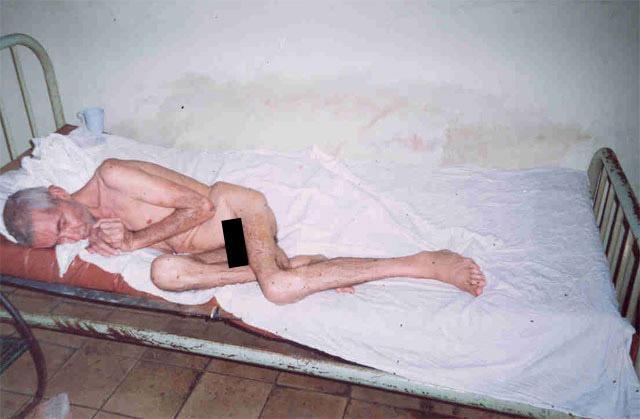
    "Free" health care may look like this. Picture from a Cuban medical facility.
    One would have thought we were well past the day when the the folks at PBS would be shilling for Castro and Communism, but one would be wrong. Mary Anastasia O'Grady brings us a remarkable example of Castroite stupefaction in her Wall Street Journal column "A Cuban fairy tale from PBS," noted here by Tim Graham at NewsBusters. O'Grady finds reporter Ray Suarez declaring the glories of Cuban health care in a three-part PBS NewsHour series last week.

    Suarez took the Potemkin village tour of the Cuban health care system; O'Grady notes that the NewsHour series was taped in Cuba with government "cooperation," so it is not exactly a great surprise that it went heavy on the party line. Yet Cuba is a national museum of Communism, the clock having been stopped around the time that Castro seized power half a century ago. It is something of a ramshackle paradise for political pilgrims that has been exposed as such many times over.

    O'Grady contrasts Suarez's series with Los Funerales de Castro, the 2009 memoir by Vicente Botin covering his four years in Cuba as a correspondent for Spanish Television:

    Botín tells about a Havana woman who was frustrated by the doctor shortage in the country. She hung a sheet on her balcony with the words "trade me to Venezuela." When the police arrived she told them: "Look, compañeros, I'm as revolutionary as the next guy, but if you want to see a Cuban doctor, you have to go to Venezuela."

    The NewsHour has posted Suarez's installment on Cuba's purported emphasis on preventive care online. This seems like a sick joke. One would indeed be well advised not to succumb to an illness requiring medical care in Cuba.

    Suarez reports that, according to the World Health Organization, the country has earned bragging rights. The average Cuban lives to the age of 78. That's slightly longer than the life span of the average American. The cost of health care in Cuba is less than $400 a year per person. In the U.S., the annual tab is almost 20 times higher. As George Orwell said, "There are some ideas so absurd that only an intellectual could believe them." Not that Suarez is exactly an intellectual.

    Suarez wants us to understand that we have much to learn from Cuba and Castro. The Maximum Leader has created a system producing better outcomes than the United States at a fraction of the cost. You might think he'd look a little harder to discover how such a "miracle" was accomplished. Is it for real?

    I can believe that the per year per person cost of health care in Cuba is minimal; health care professionals are slaves who are paid slave wages and medical infrastructure is, shall we say, deficient Commenting on Michael Moore's film Sicko, Jay Nordlinger provides a slightly more realistic portrait than Suarez's:

    Testimony and documentation on the subject are vast. Hospitals and clinics are crumbling. Conditions are so unsanitary, patients may be better off at home, whatever home is. If they do have to go to the hospital, they must bring their own bedsheets, soap, towels, food, light bulbs -- even toilet paper. And basic medications are scarce. In Sicko, even sophisticated medications are plentiful and cheap. In the real Cuba, finding an aspirin can be a chore. And an antibiotic will fetch a fortune on the black market.

    A nurse spoke to Isabel Vincent of Canada's National Post. "We have nothing," said the nurse. "I haven't seen aspirin in a Cuban store here for more than a year. If you have any pills in your purse, I'll take them. Even if they have passed their expiry date."

    The equipment that doctors have to work with is either antiquated or nonexistent. Doctors have been known to reuse latex gloves -- there is no choice. When they travel to the island, on errands of mercy, American doctors make sure to take as much equipment and as many supplies as they can carry. One told the Associated Press, "The [Cuban] doctors are pretty well trained, but they have nothing to work with. It's like operating with knives and spoons."

    And doctors are not necessarily privileged citizens in Cuba. A doctor in exile told the Miami Herald that, in 2003, he earned what most doctors did: 575 pesos a month, or about 25 dollars. He had to sell pork out of his home to get by. And the chief of medical services for the whole of the Cuban military had to rent out his car as a taxi on weekends. "Everyone tries to survive," he explained. (Of course, you can call a Cuban with a car privileged, whatever he does with it.)

    So deplorable is the state of health care in Cuba that old-fashioned diseases are back with a vengeance. These include tuberculosis, leprosy, and typhoid fever. And dengue, another fever, is a particular menace. Indeed, an exiled doctor named Dessy Mendoza Rivero -- a former political prisoner and a spectacularly brave man -- wrote a book called ¡Dengue! La Epidemia Secreta de Fidel Castro.

    (Dr. Miguel Faria has more on ¡Dengue! here.)

    University of Oklahoma Professor of Anthropology Katherine Hirschfeld actually conducted ethnographic field work in Cuba on the health care system for 10 months in 1997. She experienced the effects of Cuban health care first hand: "Hirschfeld, then a 29 year-old doctoral student, was hospitalized in May 1997 with dengue fever in Santiago. Doctors were expected to keep the outbreak quiet, she says. And she was sent to a secret ward where an armed guard stood before her door."

    In a paper on her field work in Cuba, Hirschfeld noted some of the difficulties: "Formally eliciting critical narratives about health care would be viewed as a criminal act both for me as a researcher, and for people who spoke openly with me."

    Professor Hirschfeld's increased awareness of Castro's tyranny caused her to ask a question that evidently did not occur to Suarez: "to what extent is the favorable international image of the Cuban health care system maintained by the state's practice of suppressing dissent and covertly intimidating or imprisoning would-be critics?"

    Professor Hirschfeld's book is Health, Politics, and Revolution in Cuba Since 1898. Professor Hirschfeld discovered that Castro has been cooking the books on his health care system, another revelation that would undoubtedly come as a shock to Suarez.

    Suarez's report on Cuban health care in 2010 is a disgrace. When Congress gets around to examining the funding of National Public Radio in connection with the termination of Juan Williams, it ought to do likewise with respect to the Public Broadcasting System.

    ...

    ONE MORE THOUGHT: With Suarez's report, PBS returns to its venerable Cold War role as one of Communism's useful idiots. Why now? I believe the answer is obviously Obamacare. Suarez wants to persuade Americans that a state-run health care system is just what the doctor ordered. Like NPR, PBS is a media adjunct of the Democratic Party.

    By Scott

    From: Power Line

  • Go to Home Page
  • Monday, November 15, 2010

    Raúl the pragmatist

    Am I in charge now?
    Shortly after he took charge of Cuba from his ailing brother, Fidel, in 2006, Raúl Castro declared that his country’s moribund communist economy needed to change. But his failure to make anything more than marginal adjustments disappointed hopes that he would follow Chinese and Vietnamese communist leaders in combining capitalist economics and growing social freedom with continued party control.

    Now, at last, Mr Castro is showing signs of boldness. Over the past few weeks he has launched some potentially far-reaching changes. By April 1, 500,000 Cubans will be laid off from their state jobs and encouraged to make their own living in small businesses. Over the next two or three years, another 800,000 are likely to join them. Eventually up to two Cubans in five will no longer work for the state.

    This week Mr Castro convened a much-postponed Congress of the Communist Party for late April: its job will be to bless the new economic model. Meanwhile, the government has released more than 50 political prisoners. Two decades after the fall of the Berlin Wall, is Cuban communism finally on the way out?

    Any answer must be hedged about with caveats. The economists advising Mr Castro are barred from talking of “reform”. In its guidelines for the party congress, the leadership declares that “only socialism [ie, communism] is capable of overcoming our difficulties and preserving the gains of the revolution” and that in the new economy “planning will be paramount, not the market.” No Cuban official has matched Deng Xiaoping’s embrace of “market socialism”, let alone his (perhaps apocryphal) injunction that “to get rich is glorious”. The welcome release of prisoners seems merely to have been a move to deflect outside criticism after the death of one of them in a hunger strike, rather than a first step in dismantling the island’s police state. Indeed the army is playing a bigger role in the economy and in government.

    Yet Raúl’s reforms go much further than Fidel’s reluctant acceptance of foreign investment and limited self-employment after the collapse of the Soviet Union, partially reversed on the appearance of a new benefactor, Hugo Chávez’s Venezuela. For the first time since the 1960s Cubans will be able to employ other Cubans (even though the constitution bans such “exploitation”). Many of the rules under which these new businesses will operate are still being drawn up. But it seems that Cubans will now be able to get loans and rent and buy property. Other changes are likely to follow. Mr Castro talks of gradually eliminating the free food rations that Cubans get, and moving towards targeted social assistance (as elsewhere in Latin America). The corollary is that wages will have to go up — and increasingly they will be set in the market.

    In all this Mr Castro is bowing to reality. He has been withering in his criticism of the featherbedding that has bankrupted the state. He has also refused to blame the American economic embargo for problems which he rightly says are self-inflicted. His pragmatism has finally won out against his brother’s doctrinaire Utopianism.

    Apart from the economy, the other big task facing Mr Castro, who is 79 (and Fidel 84), is to start handing over power to a younger generation. That may come after the party congress next year. In the meantime, his new boldness represents an opportunity for those who hope that Cuba will eventually join the rest of Latin America in accepting democracy and the market economy, for once the market’s green shoots appear they tend to flourish.

    How to help kill communism

    Outsiders should take their lead from the common position that Europe adopted in 1996, which allows it to help in “the progressive and irreversible opening of the Cuban economy” while predicating closer friendship on moves towards democracy. Offering training and credit — as Brazil has done — to Cuba’s incipient private sector would be a good move. Rewarding Cuba for releasing prisoners who should never have been locked up in the first place — as Miguel Moratinos, Spain’s recently sacked foreign minister, wanted — would not.

    America’s embargo remains as futile and counter-productive as ever. Although Barack Obama has commendably reversed George W. Bush’s restrictions on visits and remittances by Cuban-Americans, Republican control of Congress will make it even less likely that the embargo will be dismantled. That’s a great shame. The embargo has allowed the Castros to pose as proud Cuban nationalists standing up to a bullying hegemon and thus helped them cling to power. If change is at last under way it is despite the embargo, not because of it.

    From: Indian Express

  • Go to Home Page
  • Sunday, October 10, 2010

    Failed socialism: Cubans know it, will Obama, too?

    It takes only 51 years to realize
    It's taken 51 years, but the Castro regime has finally figured out what the rest of the world has already learned and what Americans need to be reminded of — that private enterprise creates wealth far better than government ever could.

    Cuba's president since 2006, Raúl Castro, recently announced his government will be laying off 500,000 people, one-tenth of the country's work force.

    Meanwhile, the Cuban government has opened up hundreds of jobs to self-employment, announced that small businesses can obtain bank loans and hire employees, and decided foreign investors now can purchase Cuban real estate.

    Cuba still has a long way to go before it has the kind of free market economy the United States has — well, sort of still has. Cubans now can create a business repairing mattresses but still can't sell them. They can operate beauty parlors and barber shops, but only as long as they have three chairs or fewer. And of course, the country has not had a leader with a name other than "Castro" since 1959.

    It's unknown if this opening will forestall Cuban communism's inevitable demise or, like Mikhail Gorbachev's perestroika before it, speed it up.

    But even the Castro regime can't ignore this: The Revolution is over. The country that was once the world's biggest exporter of coffee can't even satisfy domestic demand. All of Cuba's historical benefactors have rejected communism. Raúl's brother, the dictator Fidel, even told The Atlantic, "The Cuban model doesn't even work for us anymore."

    One would hope that folks in Washington would heed that message. The truth is that the Cuban model has never worked at all — not in Cuba, not anywhere. That's why Cuban-Americans in Florida and elsewhere long ago fled their country for the opportunities and freedoms they enjoy here.

    And yet with all of the historical evidence to the contrary, this present U.S. administration seems unable to resist the temptation to dip its toe time and again into the quicksand of state control. Taxpayers have watched their government bail out huge corporations at taxpayer expense, nationalize part of the banking and automotive industries, and gain control of part of the nation's health-care system.

    The United States continues to have the second-highest corporate tax rate in the world, along with myriad deductions designed to entice private employers to do the government's bidding.

    In the midst of the longest economic downturn in recent memory, the Obama administration continues to try to spend our way to prosperity, as if our children and grandchildren will never have to pay the price for our recklessness.

    Any U.S. political leader with the guts to cut the work force by 10 percent would get my vote immediately, so in that sense, bravo Raúl.

    At the same time, let's not forget that he was at Fidel's side during his long reign over Cuba, when Cubans' personal, political and property rights were violated as a matter of state policy. The long-awaited transformation of Cuba may have begun, but it probably will have to be completed by someone not named Castro.

    Regardless of who is in charge, the island Americans have long watched so warily as a potential launching pad could soon be a vacation spot or, for some Cuban-Americans, a place to reunite with families not seen for many years.

    Someday Cubans may enjoy the prosperity that comes when the government allows the free market to work.
    Let's hope Americans do as well.

    From: Sun Sentinel

  • Go to Home Page
  • Monday, August 9, 2010

    Raul Castro wants “an opening” with Washington to help with the economy

    Cardinal Jaime Ortega, Roman Catholic archbishop of Havana, told The Washington Post that Cuban President Raul Castro wants “an opening” with the United States.

    “He has a desire for an opening with the US government,” Ortega was quoted as saying. “He repeated to me on several occasions that he is ready to talk to the United States government directly, about every issue”.
    Ortega and the Catholic Church led negotiations with the Cuban government that secured in recent weeks the release of more than 50 dissidents who have been jailed for years.
    The church official made the comments in an interview with the columnist Jackson Diehl, who published them in Monday's edition of the US daily.
    According to Ortega, Castro's motivation to improve relations with the United States lies in the chance that Cuba's economy can be revived by US trade and investment.
    When asked whether such talks could include democratic reform as requested by the administration of US President Barack Obama, the cardinal said things need to be taken “step by step.”
    “It's not realistic to begin at the end. This is a process. The most important thing is to take steps in the process” Ortega said.
    He highlighted the current situation as “something new” and as something that is set to “open possibilities” in the communist island.
    Ortega was in Washington last week to collect a prize, in what was his second visit to the US capital in a little over one month.
    He met with high officials of the Obama administration, including Obama's National Security Adviser Jim Jones and Arturo Valenzuela, the Assistant Secretary of State for Western Hemisphere Affairs. In his first visit to Washington in late June, he had already met with Valenzuela.

    From: MercoPress

  • Go to Home Page
  • Monday, July 26, 2010

    CastroCare in Crisis: Lessons of ‘Single-Payer’ Health Care


    The single-payer crowd, which advocates for government monopoly over people’s right to access medical services, is ready for the next big push.  Obamacare was just the “appetizer,” according to activists at the Netroots conference this week.  Maybe it’s time to check in to see how “single payer” works in reality.  Destination: Havana.

    Although Cuba’s government commits 16 percent of its budget to health care, the Communist dictatorship’s real health-care “system” is dedicated to serving cash-paying customers from Canada and other countries.

    This comes from a fascinating article in the latest issue of Foreign Affairs, “CastroCare in Crisis,” by Laurie Garrett of the Council on Foreign Relations. It’s not news that the Castro brothers profit from medical tourism. Michael Moore infamously shilled for the enterprising Havana Hospital in his movie SiCKO, where he brought 9/11 Ground Zero rescue workers to be treated. The Havana Hospital appears to be a more competitive, patient-centered enterprise than any American general hospital I’ve seen: It posts prices for its services, reports testimonials, and can schedule surgeries on short notice (three days for open-heart surgery)!

    Garrett explains that the hospitals that serve foreigners are owned by a government-owned tourism conglomerate, and serve patients from 70 different countries. Canadians are significant customers. Like Cuba, Canada controls access to medical services through a government monopoly, so citizens cannot get timely care. Unlike Cuba, Canada allows the rest of the economy to operate freely, so Canadians are rich enough to be able to pay just under $7,000 for knee replacements in Cuba (instead of waiting for months in Canada). But what will happen when the Castros are gone?

    Two competing effects, according to Garrett: An influx of U.S. patients will be free to travel to Cuba for treatment, but an exodus of physicians will be free to emigrate to the U.S. Plus, Cuba has the second-oldest population in the Americas, with only one quarter of the population under 40 years of age. Once the Cuban people are free of Communism, their pent-up demand for medical care will also explode. Cuban patients (as opposed to Canadian patients in Cuba) already have to provide their own syringes, sheets, and towels. Soap, disinfectant, and sterile equipment are rare.

    Unfortunately, Garrett does not consider the consequences of Obamacare, which will likely accelerate the international travel of U.S. patients, while minimizing the emigration of Cuban doctors. If Cuba becomes a free society that welcomes foreign capital, investors will soon decide that investing in Cuban hospitals that serve U.S. and other patients is a good bet. There will be plenty of opportunities for Cuban surgeons who stay at home.

    By:  John R. Graham

  • Go to Home Page